Diabetic Eye Screening: What You Need to Know to Protect Your Vision
When you have diabetes, diabetic eye screening, a routine eye exam designed to detect early signs of damage caused by high blood sugar isn’t optional—it’s your best defense against losing sight. This isn’t about checking if you need new glasses. It’s about finding diabetic retinopathy, a condition where high blood sugar damages the tiny blood vessels in the retina before it causes permanent harm. And here’s the thing: you won’t feel it coming. No pain. No blurry vision at first. That’s why waiting for symptoms is like waiting for a fire alarm to go off before you check the smoke detector.
People with diabetes are at risk for more than just retinopathy. diabetic eye disease, an umbrella term covering retinopathy, macular edema, cataracts, and glaucoma can creep up slowly. High blood sugar weakens blood vessels, causes swelling in the macula (the part of your eye that gives you sharp central vision), and increases pressure inside the eye. All of this can happen even if your diabetes feels under control. Studies show that up to 45% of adults with diabetes have some level of retinal damage by the time they get screened. But catch it early—within the first few years—and treatment can stop or slow it down almost every time.
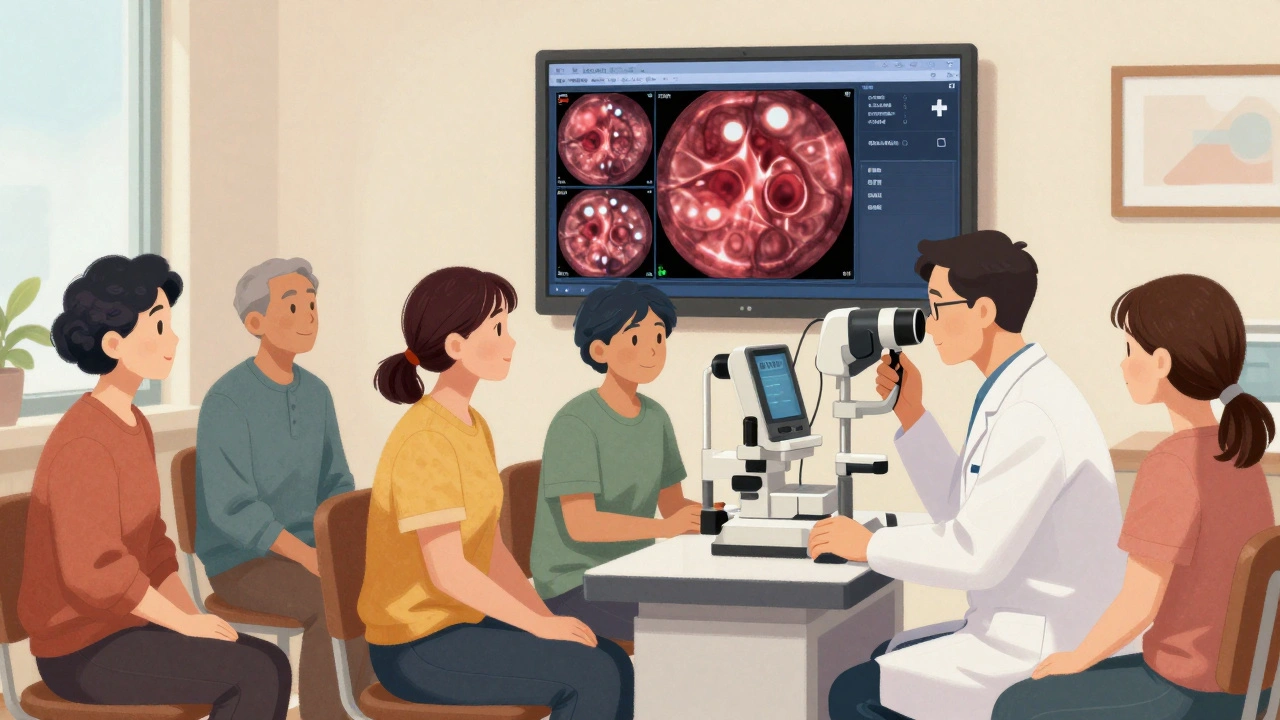
What happens during a diabetic eye screening? It’s not complicated. Your pupils get dilated with drops so the eye doctor can see the back of your eye clearly. They take pictures of your retina, sometimes with a special camera that shows blood vessel leaks or swelling. They might check your eye pressure too. No needles. No pain. Just a few minutes of your time. And if they find anything? You’ll be referred for treatment—maybe laser therapy, injections, or just tighter blood sugar control. The goal isn’t to scare you. It’s to make sure you don’t lose vision because you skipped a checkup.
You don’t need to wait for your doctor to remind you. If you have type 1 or type 2 diabetes, you should get screened within the first year after diagnosis, then at least once a year after that. If your eyes are already showing changes, you might need to go every 3 to 6 months. And if you’re pregnant and have diabetes? Screenings become even more urgent—changes can happen fast. This isn’t just about your eyes. It’s about keeping your independence, your ability to drive, read, work, and enjoy life without fear.
Below, you’ll find real advice from people who’ve been through this—how to prepare for the exam, what to ask your doctor, how to spot early warning signs, and why managing your blood sugar isn’t just about your feet or kidneys—it’s about your vision too. These aren’t theoretical tips. They’re from patients and providers who’ve seen what happens when screening is ignored—and what happens when it’s done right.
Diabetic Eye Screening: How Often You Need It and How Teleophthalmology Is Changing the Game
Diabetic eye screening saves vision-but most people skip it. Learn how often you need it, how teleophthalmology is making it easier, and why AI is changing the game for diabetes-related eye disease.