Diabetic Foot Ulcers: Causes, Risks, and How to Prevent Them
When you have diabetes, even a small cut on your foot can turn into something dangerous — a diabetic foot ulcer, an open sore on the foot that doesn’t heal easily due to poor blood flow and nerve damage. Also known as diabetic foot wound, it’s one of the most common reasons people with diabetes end up in the hospital. This isn’t just a skin problem. It’s a sign that your body’s ability to heal and sense injury is breaking down.
Most diabetic foot ulcers, open sores on the feet caused by nerve damage and poor circulation in people with diabetes. Also known as diabetic foot wound, it’s one of the most common reasons people with diabetes end up in the hospital. This isn’t just a skin problem. It’s a sign that your body’s ability to heal and sense injury is breaking down.
Most peripheral neuropathy, nerve damage that reduces feeling in the feet, making it hard to notice injuries is the root cause. You step on something sharp, walk on it all day, and never feel it. By the time you see a red spot or blister, it’s already infected. At the same time, poor circulation, reduced blood flow to the feet that slows healing and increases infection risk means your body can’t send enough white blood cells or nutrients to fix the damage. Together, these two problems — numbness and slow healing — create the perfect storm.
It’s not just about diabetes duration. People who smoke, have high blood pressure, or don’t check their feet daily are at higher risk. Even wearing tight shoes or walking barefoot can trigger an ulcer. And once one forms, it doesn’t heal on its own. Without proper care, it can lead to bone infection, gangrene, or worse — amputation.
But here’s the good news: most diabetic foot ulcers are preventable. Checking your feet every day, keeping them clean and dry, wearing proper shoes, and controlling your blood sugar cuts your risk dramatically. It’s not about expensive creams or special treatments. It’s about consistency. Know the signs — redness, swelling, drainage, or a bad smell — and act fast. The earlier you catch it, the easier it is to fix.
The posts below cover real-world advice from people who’ve dealt with this, doctors who treat it, and studies that show what actually works. You’ll find tips on foot care routines, how to spot early warning signs, why some medications make ulcers worse, and how to avoid hospital visits altogether. No fluff. No guesswork. Just what you need to protect your feet — and your future.
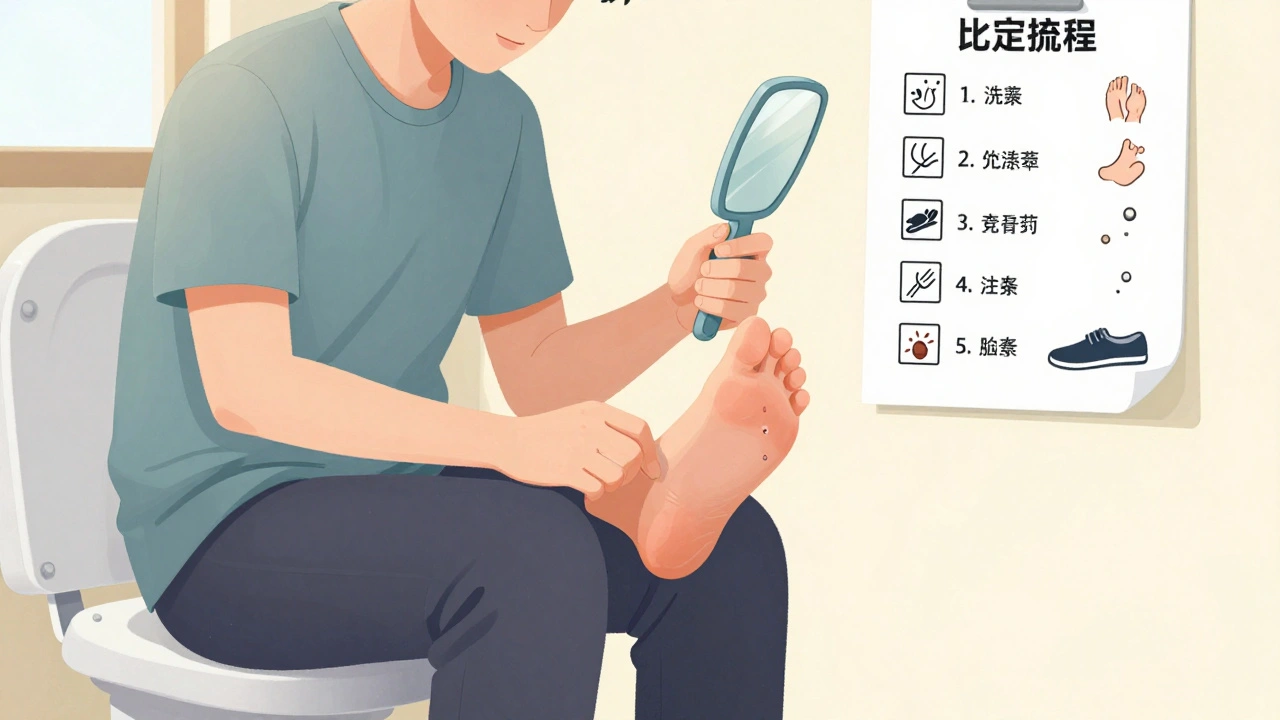
Diabetes Foot Care: Ulcer Prevention and Daily Inspection Checklist
Learn how to prevent diabetic foot ulcers with a proven daily inspection checklist. Understand risk levels, proper foot care, footwear rules, and when to seek help to avoid amputation.