Diabetic Retinopathy: Causes, Risks, and What You Can Do
When you have diabetes, your body struggles to manage blood sugar—and over time, that affects more than just your energy levels. Diabetic retinopathy, a condition where high blood sugar damages the tiny blood vessels in the retina. It’s the most common cause of vision loss among working-age adults with diabetes. Left unchecked, these damaged vessels leak fluid, swell, or grow abnormally, slowly blurring your sight. Many people don’t notice symptoms until the damage is advanced, which is why regular eye checks aren’t optional—they’re life-changing.
Blood sugar control, how well your body manages glucose over time is the biggest factor in whether you develop this condition. Studies show that keeping HbA1c below 7% cuts your risk by up to 76%. But it’s not just about numbers. High blood pressure, a common companion to diabetes speeds up the damage. Even if your sugar is steady, uncontrolled blood pressure can push fluid into the retina faster. Then there’s duration of diabetes, how long you’ve had the condition. After 20 years, nearly all type 1 diabetics and over 60% of type 2 diabetics show some signs of retinopathy.
It’s not inevitable. The same tools that help you manage diabetes—daily monitoring, healthy eating, exercise, and medication—also protect your eyes. But you can’t rely on how you feel. Vision loss happens quietly. That’s why annual dilated eye exams are non-negotiable. Even if your vision seems fine, a doctor can spot early leaks or swelling before you notice anything wrong. And if changes are found, treatments like laser therapy or injections can stop progression in most cases.
You’ll find posts here that connect the dots between diabetes and eye health. Some cover how steroid use can spike blood sugar and worsen retinopathy. Others explain how foot care routines and medication safety habits tie into overall diabetes management. You’ll also see advice on tracking your health over time, avoiding drug interactions, and making sure your care plan is working—not just on paper, but in real life. This isn’t about fear. It’s about awareness. With the right steps, you can keep your vision sharp and your life full.
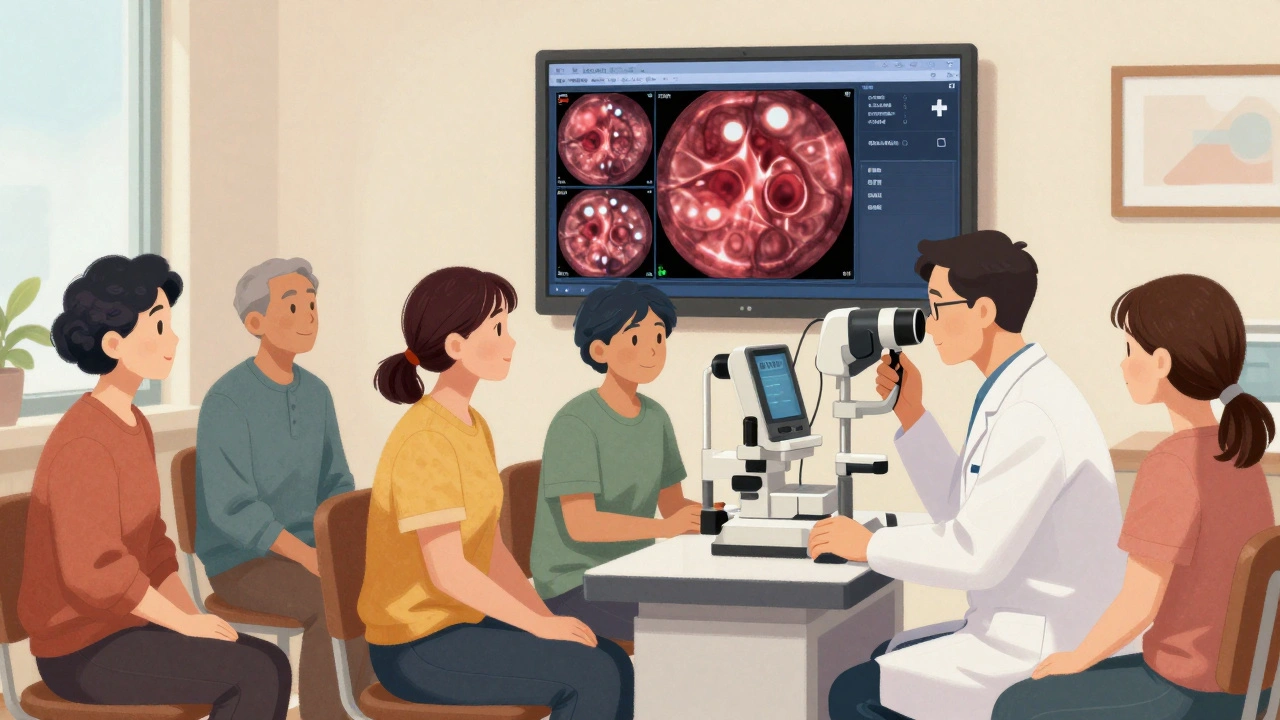
Diabetic Eye Screening: How Often You Need It and How Teleophthalmology Is Changing the Game
Diabetic eye screening saves vision-but most people skip it. Learn how often you need it, how teleophthalmology is making it easier, and why AI is changing the game for diabetes-related eye disease.