Ditans Safety: What You Need to Know About This Medication and Its Risks
When it comes to treating migraines, Ditans, a newer class of migraine-specific drugs designed to target brain receptors without constricting blood vessels. Also known as 5-HT1F receptor agonists, they offer relief without the cardiovascular risks of older triptans. But safety isn’t guaranteed just because they’re newer. People with heart disease, uncontrolled high blood pressure, or those taking certain antidepressants need to be especially careful.
Ditans safety isn’t just about avoiding heart issues—it’s also about what happens when these drugs mix with other medications. For example, combining Ditans with SSRIs or SNRIs can raise the risk of serotonin syndrome, a rare but life-threatening reaction caused by too much serotonin in the brain. Also known as serotonin toxicity, it can cause confusion, rapid heart rate, muscle rigidity, and fever. This isn’t theoretical. Real cases have been reported in patients taking both a Ditans and an antidepressant, even at normal doses. That’s why doctors now check your full med list before prescribing these drugs.
Another key part of Ditans safety is knowing who shouldn’t use them at all. If you’ve had a stroke, transient ischemic attack, or severe liver problems, these drugs are usually off-limits. Even if you’re otherwise healthy, watch for dizziness, nausea, or a strange feeling of heaviness in your chest or limbs after taking one. These aren’t always signs of a crisis—but they’re signals to pause and talk to your doctor. Unlike triptans, Ditans don’t narrow blood vessels, so they’re safer for people with heart conditions. But that doesn’t mean they’re risk-free.
What you won’t find in the ads is how often these drugs are prescribed without proper follow-up. Many patients take Ditans for months without checking in, assuming they’re fine because they don’t have chest pain. But side effects can build up slowly. Fatigue, brain fog, or mood changes might seem unrelated—but they could be your body’s way of telling you something’s off. The best way to stay safe is to keep a simple log: what you took, when, and how you felt afterward. Share that with your provider every visit.
The posts below give you real-world insight into how Ditans fit into broader medication safety. You’ll find clear breakdowns of how they compare to triptans, what drug interactions to watch for, and how serotonin syndrome shows up in real patients. There’s also guidance on tracking side effects, talking to your pharmacist about combinations, and recognizing when a headache treatment is doing more harm than good. This isn’t just about one drug—it’s about learning how to use any medication wisely, safely, and with your full awareness.
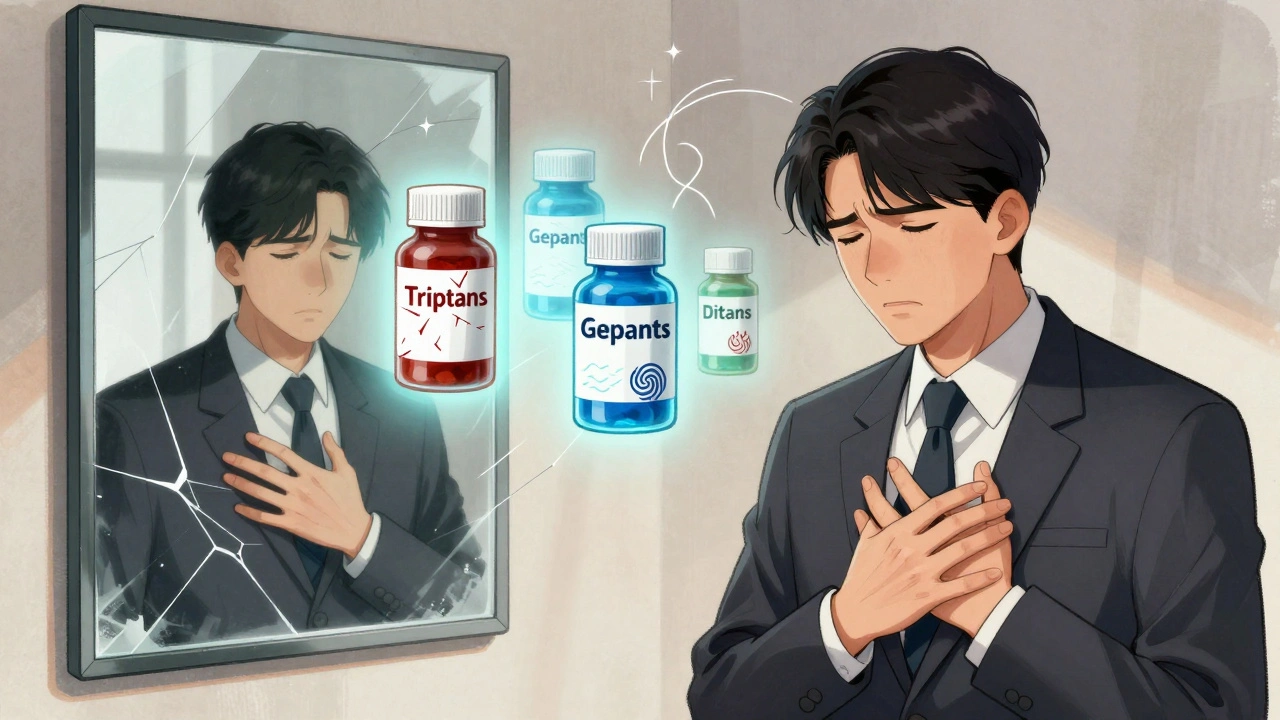
Migraine Medications: Triptans, Gepants, and Ditans Safety Compared
Triptans, gepants, and ditans offer different safety profiles for migraine relief. Triptans work fast but carry heart risks. Gepants are safer for heart patients but slower. Ditans avoid heart issues but cause dizziness and sedation. Know your options.