EpiPen Travel: What You Need to Know Before Flying or Heading Out with Your Epinephrine Auto-Injector
When you rely on an EpiPen, a handheld epinephrine auto-injector used to treat life-threatening allergic reactions. Also known as epinephrine auto-injector, it’s not just medicine—it’s your lifeline. Skipping a trip because you’re worried about your EpiPen? You don’t have to. But you do need to know the rules. The FDA, TSA, and airlines all have clear guidelines for carrying epinephrine, and ignoring them can leave you stranded—or worse, unprotected.
Traveling with an EpiPen, a handheld epinephrine auto-injector used to treat life-threatening allergic reactions. Also known as epinephrine auto-injector, it’s not just medicine—it’s your lifeline isn’t just about packing it. It’s about keeping it at the right temperature, knowing where to store it on a plane, and making sure it won’t get confiscated. Airlines require you to carry it in your carry-on—never checked luggage. Temperature matters too. Heat above 86°F or freezing can damage the drug inside. That means don’t leave it in a hot car or a snowbank. A small insulated pouch with a cool pack works better than a regular purse or backpack.
International travel adds another layer. Not every country recognizes the brand name EpiPen. Some call it Adrenaclick, Auvi-Q, or just epinephrine injection. Always carry a doctor’s note in English—and ideally translated—stating your condition and the need for the device. Some countries require a prescription even for personal use. You can’t assume your U.S. prescription works abroad. And never rely on buying one overseas. Stock varies, and counterfeit pens are real.
What about airport security? TSA allows EpiPens through checkpoints without issue, as long as they’re declared. You don’t need to remove them from your bag, but be ready to show them if asked. No need for a special form—just a simple verbal statement like, "I have an epinephrine auto-injector for a severe allergy." Keep the original packaging with the prescription label visible. That’s your proof it’s legitimate. No one’s asking you to prove your allergy, but they can ask to see the device is yours.
And here’s the thing most people forget: always carry two. Allergic reactions can come back, or the first dose might not work. The American Academy of Allergy, Asthma & Immunology recommends carrying two at all times. That means two in your carry-on, two in your daypack, two in your hotel safe if you’re traveling for weeks. It’s not paranoia—it’s preparedness.
There’s no magic trick. No app that replaces common sense. But if you follow the basics—carry it with you, keep it cool, bring two, have a note, and know the rules—you can travel anywhere without fear. The posts below cover real cases, storage hacks, airline policies, and what to do if your EpiPen fails mid-flight. You’ll find advice from people who’ve been through it: the parent who got stopped at customs, the college student who missed a flight because they didn’t know the rules, the veteran who carries his in his boot. This isn’t theory. It’s what works.
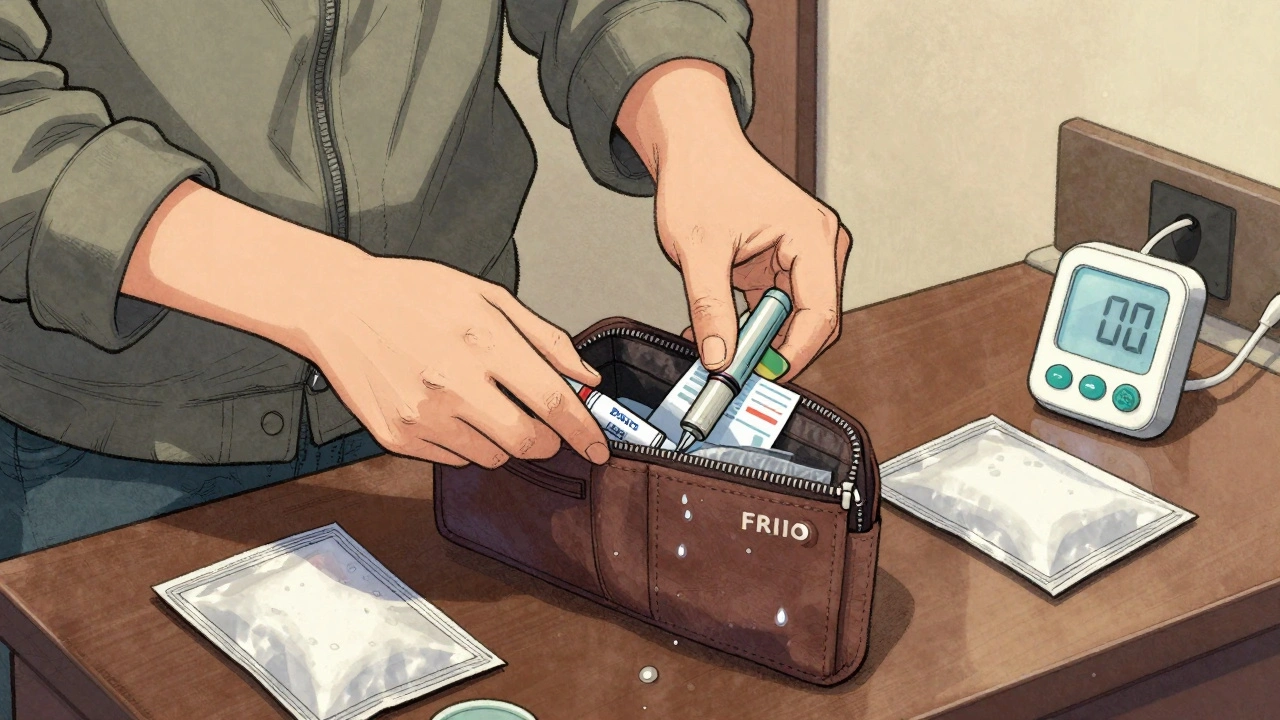
How to Keep Travel Medications Within Shelf Life on Long Trips
Learn how to protect your travel medications from heat, cold, and moisture to keep them effective on long trips. Essential tips for insulin, EpiPens, and other temperature-sensitive drugs.