Eye Exam Frequency: When to Get Checked and What You Need to Know
When it comes to your vision, eye exam frequency, how often you get your eyes checked by a professional. It's not just about updating your glasses. Regular eye exams catch silent threats like glaucoma, a group of eye diseases that damage the optic nerve often without symptoms until it's too late, or diabetic retinopathy, eye damage from high blood sugar that can lead to blindness if unchecked. These conditions don’t wait for you to notice blurry vision—they creep in quietly, and the only way to stop them early is through scheduled checks.
Who needs an eye exam and how often? If you’re under 40 and healthy with no vision problems, every two years is usually enough. But if you’re over 60, have diabetes, high blood pressure, or a family history of eye disease, you should go every year—or even more often. Kids should get their first exam by age 3, again before starting school, and then as recommended. People with diabetes need annual screenings because high blood sugar slowly destroys blood vessels in the retina. You might not feel any change, but your eye doctor can see the damage long before you notice it. And if you wear contacts, you need a check-up every year to make sure your eyes aren’t developing infections or corneal changes from long-term use.
It’s not just about prescriptions. Eye exams check for signs of other health problems too. High cholesterol can show up as a ring around the cornea. High blood pressure leaves marks on the retina. Even some brain tumors can be spotted through changes in the optic nerve. That’s why skipping your eye exam is like skipping a full-body scan. You’re missing a chance to catch problems before they become serious. The eye exam frequency that works for your neighbor might not be right for you. Your health history, age, and risk factors should guide your schedule—not a generic rule from the internet.
What you’ll find below are real, practical guides on how to protect your vision. From managing eye health with diabetes to understanding what your eye doctor looks for during a routine check, these posts give you the facts without the fluff. You’ll learn when to push for more frequent exams, what tests actually matter, and how to spot warning signs before it’s too late. No guesswork. No myths. Just what works.
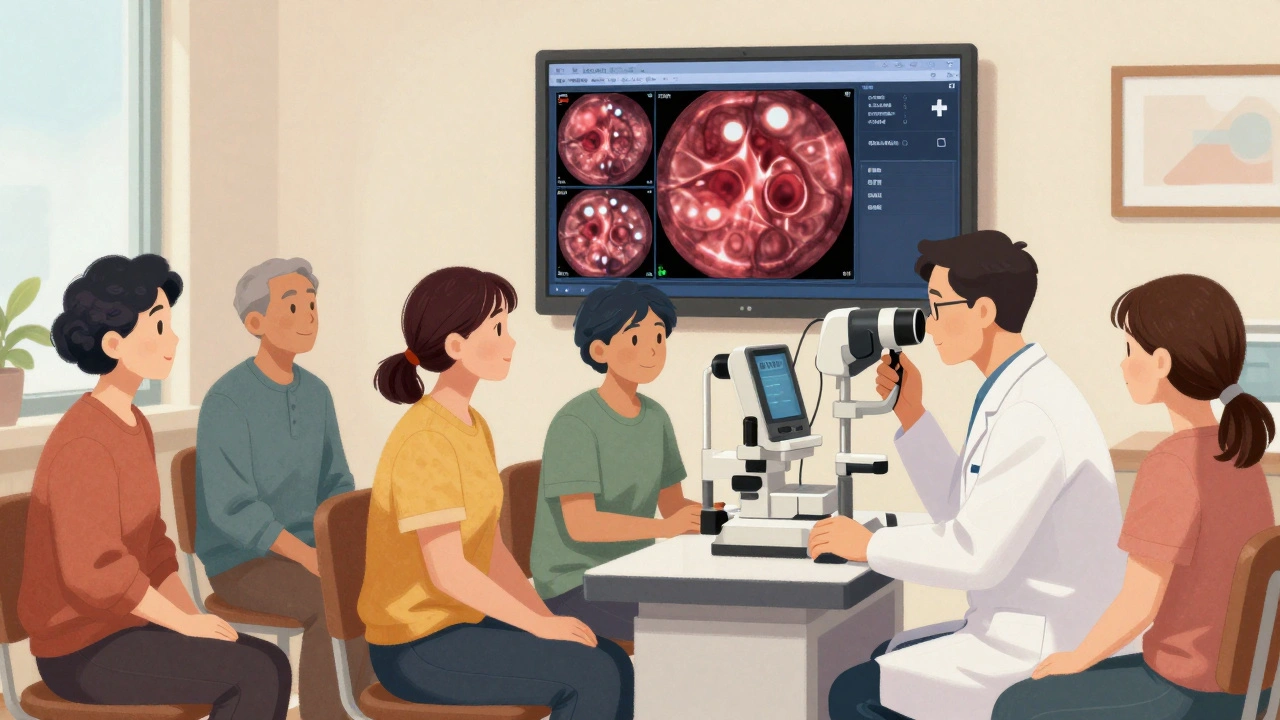
Diabetic Eye Screening: How Often You Need It and How Teleophthalmology Is Changing the Game
Diabetic eye screening saves vision-but most people skip it. Learn how often you need it, how teleophthalmology is making it easier, and why AI is changing the game for diabetes-related eye disease.