FDA Foreign Inspections: What You Need to Know About Global Drug Safety Checks
When you take a generic pill or a prescription made in India, China, or elsewhere, the FDA foreign inspections, a system where the U.S. Food and Drug Administration checks drug factories outside the United States to ensure they follow safety and quality rules. Also known as overseas pharmaceutical audits, these inspections are the final gatekeeper between a medicine being made and it ending up in your medicine cabinet. The FDA doesn’t just trust what companies say—they send inspectors to factories, review records, and even take samples. Over half of the active ingredients in U.S. medications come from abroad, and nearly 40% of finished drugs are made overseas. If those factories cut corners, the risk isn’t theoretical—it’s real. In 2018, the FDA blocked over 1,200 shipments of contaminated or improperly made drugs from just one country alone.
FDA foreign inspections aren’t random. They’re guided by risk: high-volume manufacturers, past violations, or facilities linked to previous recalls get priority. The agency looks at everything: clean rooms, equipment calibration, data integrity, and whether lab results are faked. One inspector found a plant in India where workers were erasing failed test results from computers. That’s not a glitch—that’s fraud. And it’s why the FDA keeps sending teams overseas, even when it’s expensive and logistically tough. These inspections directly protect you from pills that don’t work, contain toxins, or lack the right dose. The pharmaceutical manufacturing, the process of making medicines under controlled conditions to ensure consistency and safety standards the FDA enforces abroad are the same ones required in the U.S. If a factory fails, the FDA can refuse to allow its products into the country. That’s why some generic drugs suddenly disappear from shelves—not because of shortages, but because the factory failed inspection.
The system isn’t perfect. Inspectors can’t be everywhere at once, and some companies still slip through. But the data shows inspections work: after the FDA started ramping up foreign visits in the 2010s, the number of drug recalls tied to manufacturing issues dropped significantly. The real win? Lower prices without lower safety. Generic drugs saved Americans over $300 billion in 2022, and most of them came from overseas factories that passed FDA scrutiny. You don’t need to know the details of every inspection—but you should know that the system is watching. The posts below dig into how bioequivalence studies prove generics work the same, how therapeutic equivalence codes determine which drugs can be swapped, and why medication safety starts long before you pick up your prescription—at the factory floor, halfway across the world.
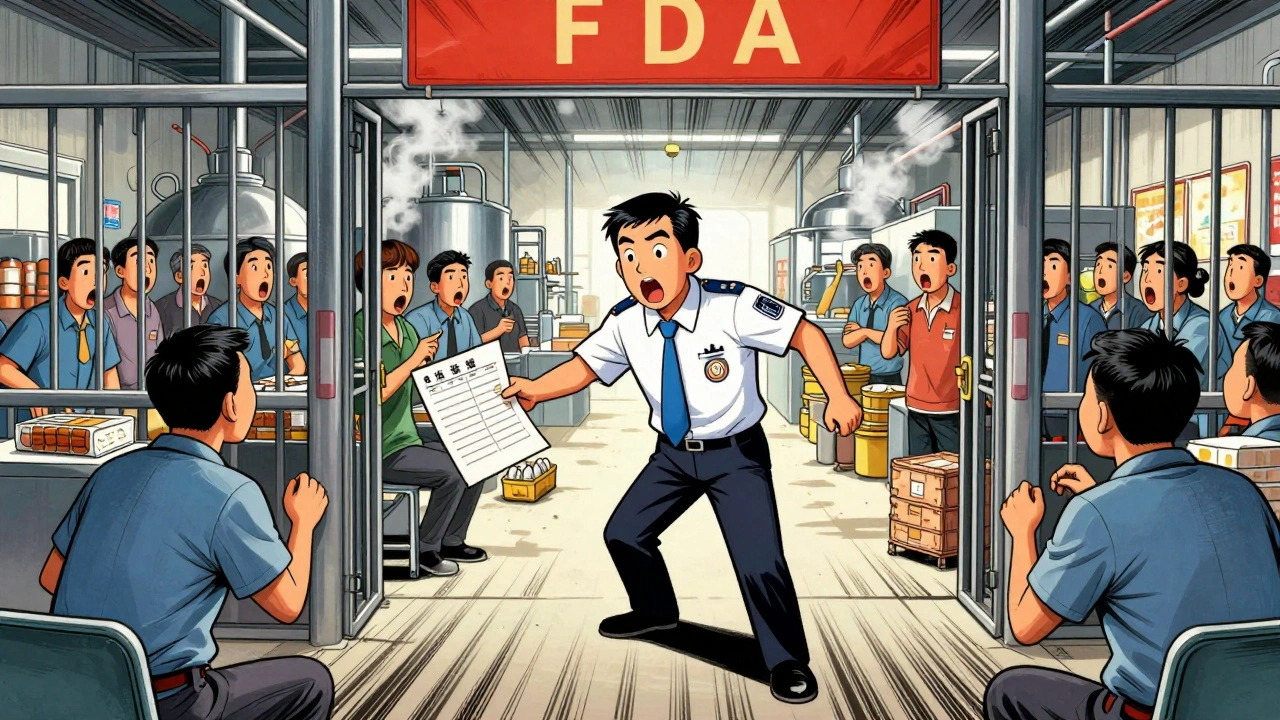
FDA Foreign Facility Inspections: What Overseas Food Plants Must Now Do to Stay Compliant
The FDA now conducts unannounced inspections of overseas food plants to ensure imported products meet U.S. safety standards. Learn what facilities must do to stay compliant and avoid import bans or criminal penalties.