FDA Inspection Requirements: What Drug Manufacturers Must Pass to Stay Legal
When you pick up a pill at the pharmacy, you expect it to work the same way every time. That’s not luck—it’s because of FDA inspection requirements, the set of rules and on-site checks the U.S. Food and Drug Administration uses to verify that drug makers follow strict quality standards. Also known as pharmaceutical GMP inspections, these audits happen at factories, labs, and distribution centers across the globe to make sure every batch of medicine meets the same high bar. Without these inspections, there’d be no way to know if a generic drug is truly equal to the brand-name version—or if it’s contaminated, underdosed, or worse.
FDA inspection requirements cover everything from how raw ingredients are stored to how workers wash their hands before handling pills. Inspectors check equipment calibration, cleaning logs, data integrity, and even whether temperature controls for sensitive drugs like insulin are working right. They don’t just ask for paperwork—they walk the floors, watch processes in real time, and pull random samples for testing. If something’s off, the plant can be shut down until fixes are made. That’s why you’ll see FDA inspection requirements tied directly to generic drug approval, the process that lets cheaper versions of brand-name drugs hit the market. A company can’t get approval unless it passes inspection first. And it’s not just about safety—inspections also enforce pharmaceutical compliance, the legal obligation to follow FDA rules on labeling, manufacturing, and reporting side effects. Companies that cut corners risk fines, product recalls, or even criminal charges. The FDA Orange Book, the official list of approved drug products with therapeutic equivalence evaluations, only includes drugs from facilities that have passed inspection. If a plant fails, its drugs get pulled from the list—even if the medicine itself is fine.
These inspections aren’t just a formality—they’re the reason you can trust that your blood pressure pill, your antibiotic, or your EpiPen will do what it’s supposed to. They’re why a generic version of a drug can cost 80% less but still work just as well. And they’re why some drugs take years to come to market—not because of slow science, but because of slow inspections. The system isn’t perfect, but without it, the medicine you rely on would be a gamble.
Below, you’ll find real-world examples of how these rules play out—from bioequivalence studies that prove generics match brand names, to how drug makers keep medications stable during shipping, to how the FDA handles violations when they happen. This isn’t theory. It’s the invisible backbone of every pill you swallow.
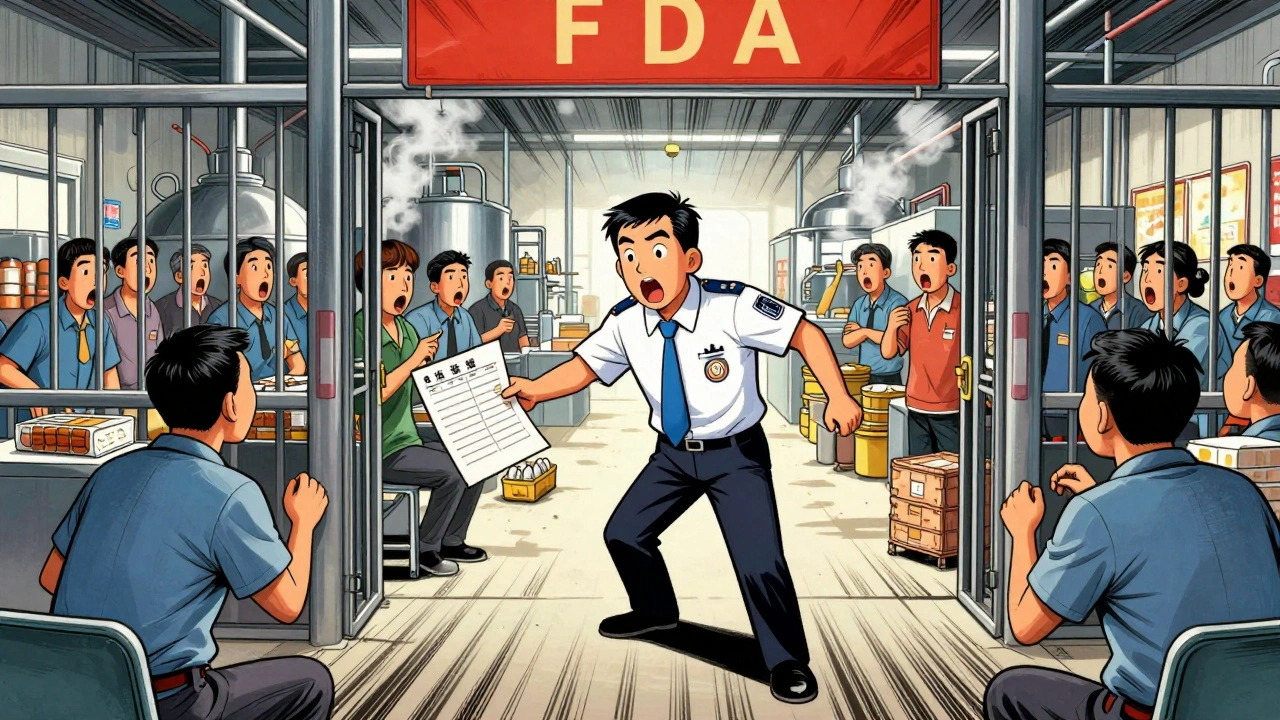
FDA Foreign Facility Inspections: What Overseas Food Plants Must Now Do to Stay Compliant
The FDA now conducts unannounced inspections of overseas food plants to ensure imported products meet U.S. safety standards. Learn what facilities must do to stay compliant and avoid import bans or criminal penalties.