FSMA Food Safety: What It Means for Your Medications and Health
When you hear FSMA food safety, the Food Safety Modernization Act, a U.S. law that shifts food safety from reacting to outbreaks to preventing them. Also known as Food Safety Modernization Act, it’s not just about lettuce and eggs—it’s also about the ingredients in your pills, supplements, and even the clean rooms where your medicine is made. The FDA doesn’t just watch what goes into your burger. It watches what goes into your ibuprofen, your insulin, your vitamin D. If a supplier of gelatin, starch, or flavoring fails an inspection, that batch could be blocked from ever reaching your medicine bottle.
Think about how many parts go into a single pill: active ingredients, fillers, coatings, capsules. Each one comes from a different supplier, often overseas. FDA inspections, on-site checks of manufacturing facilities to verify compliance with safety standards now cover foreign sites too. Before FSMA, the FDA inspected only 1% of foreign drug facilities. Today, that number is climbing—and it’s not just paperwork. Inspectors show up unannounced, check temperature logs, test for mold, and trace raw materials back to their source. This is why some generic drugs suddenly disappear from shelves: a supplier got flagged, and the FDA paused shipments until the problem was fixed.
It’s also why your drug contamination, the presence of harmful substances in medications, such as nitrosamines, heavy metals, or microbial impurities alerts show up in your email. Those aren’t random scares. They’re direct results of FSMA’s mandate for preventive controls. When a lab finds traces of NDMA in a blood pressure med, the FDA doesn’t wait for people to get sick. They pull the batch, notify pharmacies, and require the maker to fix their process. That’s prevention, not reaction.
And it’s not just pills. Your supply chain safety, the end-to-end protection of ingredients and products from raw material to final packaging matters for things like liquid antibiotics or injectables. A single contaminated vial can cause a hospital outbreak. FSMA forces companies to map every step—from the farm that grows the herb used in your supplement, to the factory that seals your pill bottle. No gaps. No blind spots.
You won’t see FSMA on your prescription label. But you feel its impact every time your medication works as expected, without unexpected side effects from hidden contaminants. It’s why you can trust that your generic metformin isn’t laced with something toxic, or that your EpiPen’s liquid won’t grow bacteria during storage. The rules are strict, the inspections are real, and the stakes? Your health.
Below, you’ll find articles that dig into how drug safety works—from bioequivalence tests that prove generics are safe, to how storage and supply chains affect what’s inside your bottle. These aren’t just about pills. They’re about the invisible systems that keep you safe every day.
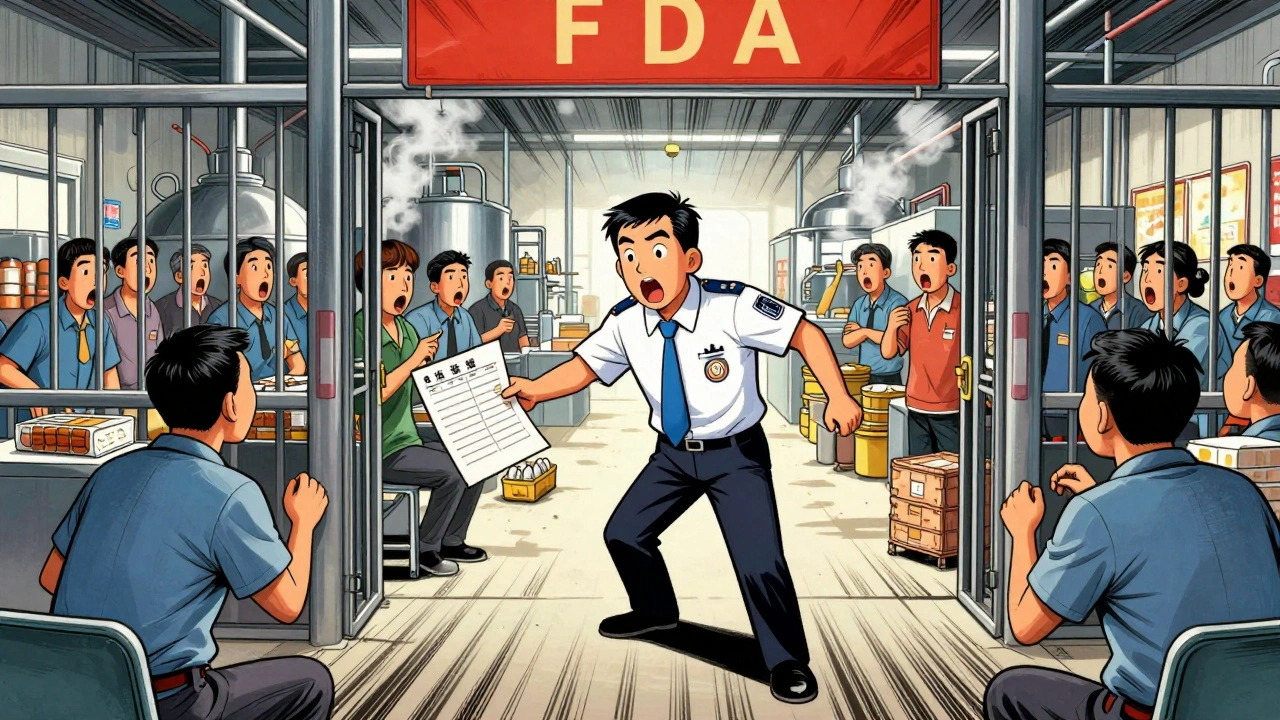
FDA Foreign Facility Inspections: What Overseas Food Plants Must Now Do to Stay Compliant
The FDA now conducts unannounced inspections of overseas food plants to ensure imported products meet U.S. safety standards. Learn what facilities must do to stay compliant and avoid import bans or criminal penalties.