Gepants Safety: What You Need to Know About This New Migraine Treatment
When it comes to treating migraines, gepants, a class of oral migraine medications that block the CGRP receptor to stop attacks before they worsen. Also known as CGRP receptor antagonists, they offer a targeted option for people who can’t take triptans or need something that doesn’t cause medication-overuse headaches. Unlike older drugs, gepants don’t constrict blood vessels, which makes them safer for people with heart disease or high blood pressure. That’s why they’ve become a go-to for many neurologists and patients looking for effective relief without the side effects of older options.
But safety isn’t just about avoiding heart risks. CGRP inhibitors, the broader category that includes both gepants and injectable monoclonal antibodies, have been studied in thousands of patients over years. Real-world data shows the most common issues with gepants are mild: nausea, fatigue, or constipation—usually gone within a few days. Serious liver injury is rare, but the FDA still requires liver function tests for some gepants after long-term use. If you’re on other medications like statins or antifungals, talk to your doctor—some drug interactions can raise gepant levels in your blood. And while they’re not addictive, using them more than 10 days a month can still lead to rebound headaches, just like any other migraine med.
What makes gepants stand out is how they fit into daily life. You can take them at the first sign of a migraine, or use them preventively if you have frequent attacks. They’re not a cure, but for many, they’re the first treatment that actually reduces the number of bad days. People with chronic migraine, medication-overuse headaches, or those who’ve tried triptans and failed often find relief here. And unlike injectables, gepants are pills—no needles, no clinic visits. That’s a big deal for someone juggling work, kids, or a busy schedule.
What you won’t find in most ads is the truth about long-term use. We don’t have 20-year data yet, but the first 5 years show no signs of cumulative toxicity. The biggest concern isn’t the drug itself—it’s whether people stop using other helpful tools like sleep hygiene, stress management, or physical therapy. Gepants work best when they’re part of a plan, not the whole plan.
Below, you’ll find real patient experiences, side effect breakdowns, and comparisons with other migraine treatments. These aren’t marketing pieces—they’re honest looks at what works, what doesn’t, and what to watch out for when you’re trying to take back control of your days.
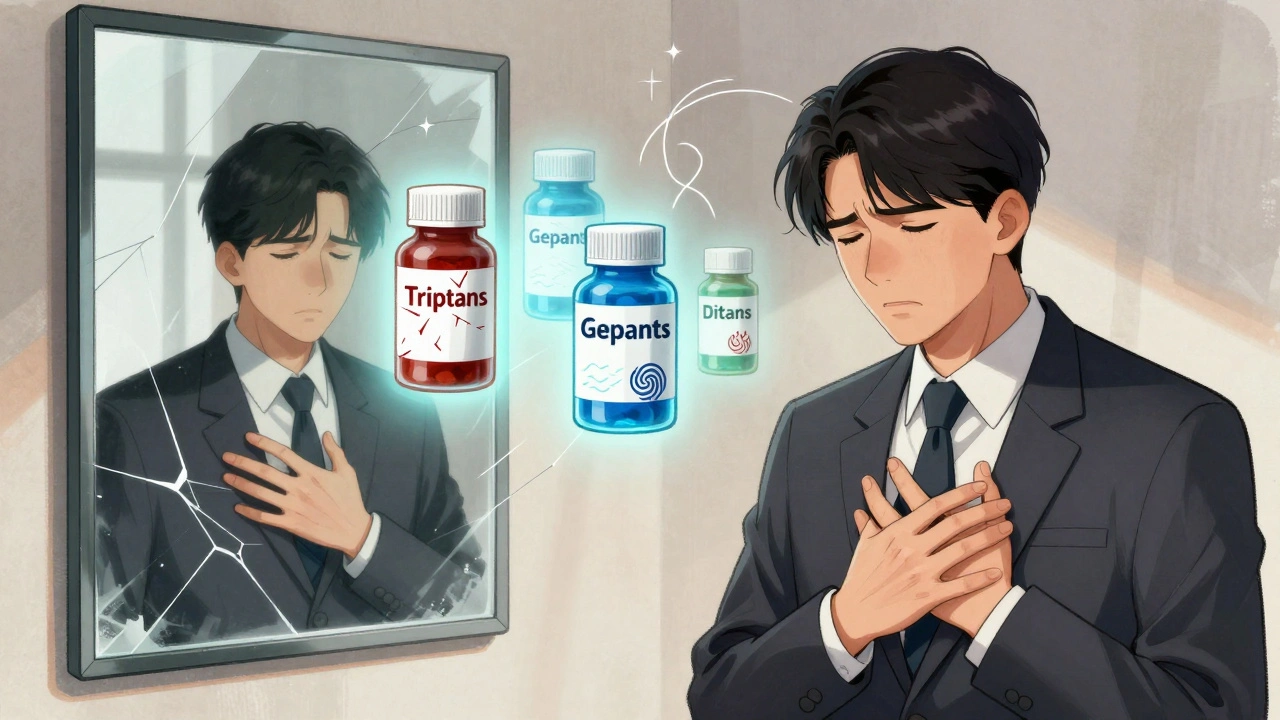
Migraine Medications: Triptans, Gepants, and Ditans Safety Compared
Triptans, gepants, and ditans offer different safety profiles for migraine relief. Triptans work fast but carry heart risks. Gepants are safer for heart patients but slower. Ditans avoid heart issues but cause dizziness and sedation. Know your options.