Insulin Travel Storage: How to Keep Your Insulin Safe On the Go
When you rely on insulin, a life-saving hormone used to manage diabetes. Also known as injectable glucose regulator, it keeps blood sugar in check—but only if it’s stored right. Heat, cold, and time can ruin insulin fast. A vial left in a hot car or frozen in a bag can lose its power, putting your health at risk. This isn’t just a theory—it’s a real problem travelers face every day.
Insulin temperature, the range where insulin stays stable matters more than most people think. Unopened insulin needs to stay between 36°F and 46°F (2°C–8°C), like in a fridge. Once you start using it, it can last up to 28 days at room temperature—up to 86°F (30°C)—but not longer. That’s why insulin cooling, using portable coolers or temperature-regulating pouches is so important on long trips. A regular cooler with ice packs works, but insulated travel cases designed for insulin are better. They keep insulin cool without freezing it, even in 100°F heat.
Flying? Don’t pack insulin in checked luggage. The cargo hold can drop below freezing or get too hot. Always carry it in your carry-on. TSA lets you bring insulin and supplies through security—you don’t need a doctor’s note, but having one helps if you’re asked. Same goes for syringes or pens: keep them in original packaging. If you’re crossing time zones, adjust your injection schedule slowly. Don’t skip doses just because you’re tired or confused by the clock.
What about road trips? Keep insulin in a cooler bag in the passenger area, not the glovebox or trunk. Even a 20-minute stop at a gas station in summer can spike the temperature inside your car past 120°F. If you’re hiking or camping, use a small insulated case with a cold pack. Some people swear by reusable gel packs that stay cool for 12+ hours. Avoid direct sunlight. Don’t leave it on the dashboard. And never, ever freeze insulin—even if it’s cold, it won’t help. Freezing breaks down the protein structure and makes it useless.
There’s also the risk of losing insulin. Always carry extra. If you’re flying internationally, bring at least two days’ worth more than you think you’ll need. Keep one set in your bag, another in your pocket. Use a pill organizer labeled for insulin if you’re taking multiple doses a day. Write the date you opened each vial on the label with a marker. That way, you won’t accidentally use old, weakened insulin.
People with diabetes travel all the time—hiking, visiting family, going on business trips. The key isn’t avoiding travel. It’s planning. Knowing how to protect your insulin means you don’t have to choose between health and freedom. The posts below show you exactly how others handle this: from airport hacks to emergency backups, from cooling gadgets that actually work to what to do if your insulin looks cloudy or clumpy. You’ll find real stories, tested tools, and simple steps that keep you safe no matter where you go.
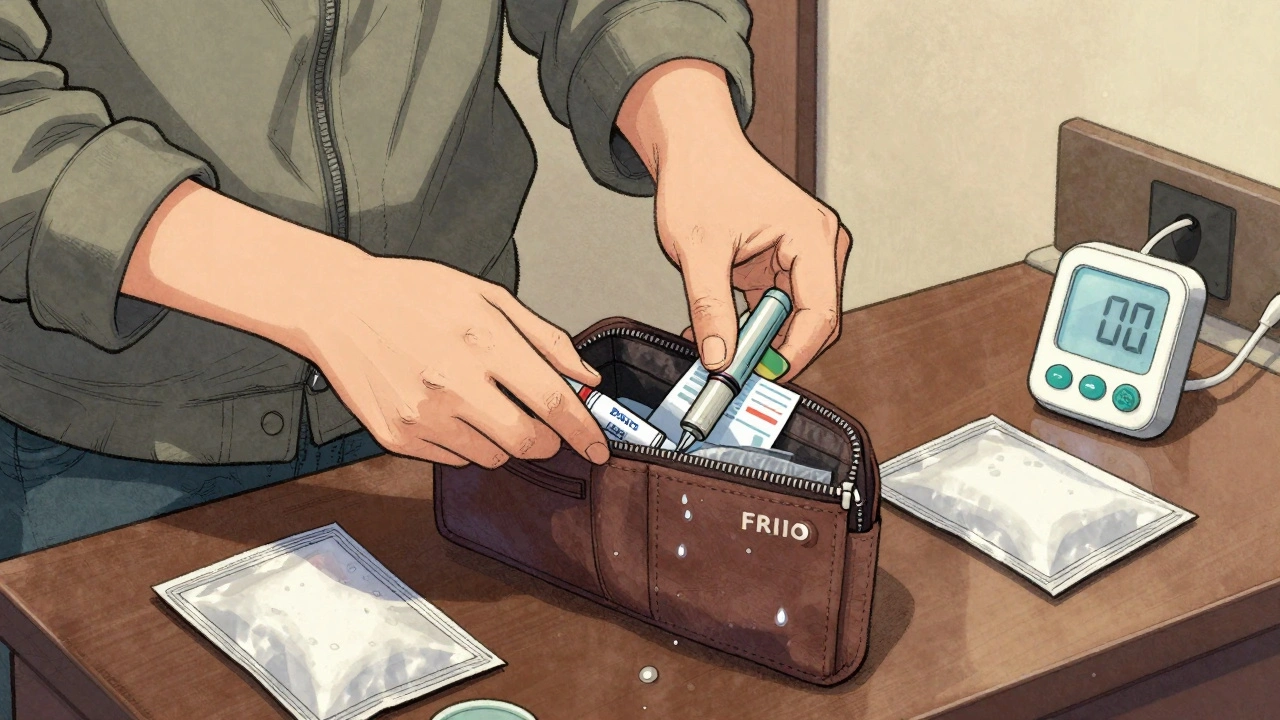
How to Keep Travel Medications Within Shelf Life on Long Trips
Learn how to protect your travel medications from heat, cold, and moisture to keep them effective on long trips. Essential tips for insulin, EpiPens, and other temperature-sensitive drugs.