Interpreter Services in Healthcare: Why Language Support Matters for Patient Safety
When interpreter services, professional language support provided in medical settings to bridge communication gaps between patients and providers. Also known as medical interpretation, it is not a luxury—it’s a lifeline. Without it, a patient might not know they’re taking the wrong dose, or that their surgery has been canceled, or that their pain isn’t being taken seriously. In the U.S. alone, over 25 million people speak English less than very well, and nearly half of them skip care or make dangerous mistakes because they can’t communicate with their doctor. This isn’t just inconvenient—it’s deadly.
Patient safety, the reduction of preventable harm caused by medical errors during healthcare delivery depends heavily on clear communication. Studies show that patients with limited English proficiency are twice as likely to suffer adverse drug events, and three times more likely to be hospitalized due to misunderstandings about their treatment. Language barriers in medicine, the challenges patients face when they cannot understand medical instructions due to linguistic differences aren’t solved by pointing at pictures or asking a family member to translate. That’s how errors happen. Trained interpreters know medical terminology, cultural context, and how to convey urgency without causing panic. They’re part of the care team—just like the nurse or the pharmacist.
Think about the posts below. You’ll find articles on medication safety, drug errors, and allergy reconciliation—all of which require perfect communication. If a patient can’t say they’re allergic to penicillin, or doesn’t understand why they need to take insulin at night, the best drug in the world won’t help. Interpreter services don’t just translate words—they prevent amputations, ER visits, and deaths. They make sure a diabetic patient knows how to check their feet, that someone on steroids understands the need to monitor blood sugar, or that a person with TB isn’t started on TNF inhibitors without proper screening. These aren’t abstract concerns. They’re daily realities in clinics and hospitals across the country.
What you’ll find here isn’t theory. It’s real-world examples of how poor communication leads to harm—and how fixing it saves lives. From how to use interpreter services in emergency rooms to why hospitals are required by law to provide them, these posts show you what works, what doesn’t, and why this isn’t just about fairness—it’s about basic competence in healthcare.
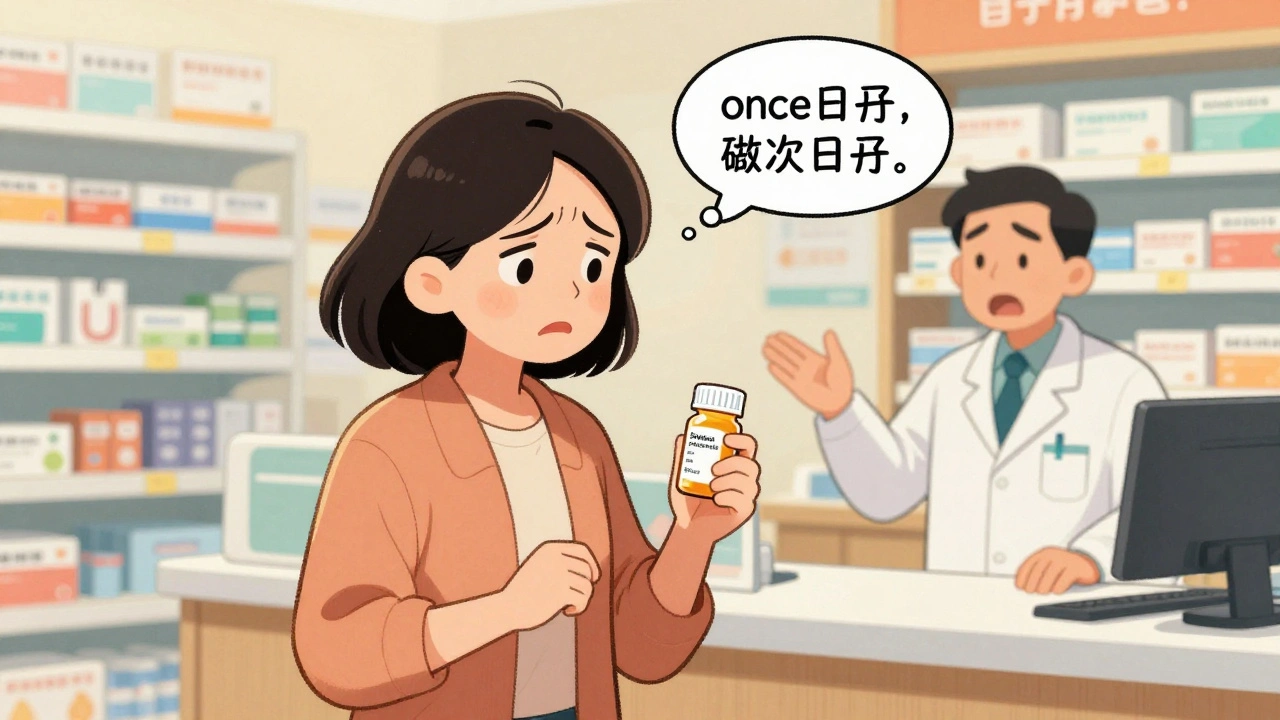
Language Barriers and Medication Safety: How to Get Help
Language barriers in healthcare lead to dangerous medication errors. Learn how professional interpreters, translated instructions, and direct observation can prevent harm-and what patients and providers can do to ensure safety.