Keep Meds Cool While Traveling: Essential Tips for Safe Drug Storage
When you keep meds cool while traveling, you’re protecting the chemical stability of your medications from heat, cold, and humidity that can break them down. Also known as temperature-sensitive drug storage, this isn’t just a suggestion—it’s a medical necessity for many common prescriptions. Insulin, epinephrine auto-injectors, thyroid meds, and even some antibiotics lose effectiveness if they get too hot. The FDA says most drugs should stay between 68°F and 77°F, but many can survive short trips up to 86°F. Beyond that, you risk reduced potency—or worse, toxic breakdown products.
Medication storage, the practice of keeping drugs in stable environmental conditions. Also known as pharmaceutical stability, it’s why your pills come with warnings like "avoid excessive heat" or "refrigerate if needed." A pill left in a hot car for an hour can degrade faster than one sitting in your medicine cabinet for months. Same goes for cold-sensitive drugs like some biologics or liquid antibiotics that freeze and become useless. Heat-sensitive medications, drugs that break down at temperatures above 86°F. Also known as thermolabile drugs, they include insulin, certain migraine treatments, and even some antidepressants. You don’t need a lab to check if your meds are still good—just look for changes in color, texture, or smell. If your insulin looks cloudy when it should be clear, or your liquid antibiotic has chunks, toss it.
Traveling with pills means planning ahead. Use insulated pouches with reusable ice packs for long car rides or flights. Keep meds in your carry-on, not checked luggage—baggage compartments can hit 120°F. If you’re flying, bring a doctor’s note explaining why you need to carry temperature-sensitive drugs. Airlines and TSA are used to it, but paperwork helps avoid delays. For road trips, store meds in the cabin, not the glove box. Even a hotel room near a window in summer can get too hot. A small travel cooler with a thermometer is cheaper than replacing a $500 prescription.
What you’ll find below are real, tested ways people manage their meds on the go—from the mom packing insulin for a cross-country trip to the senior taking thyroid pills on a cruise. No fluff. No theory. Just what works.
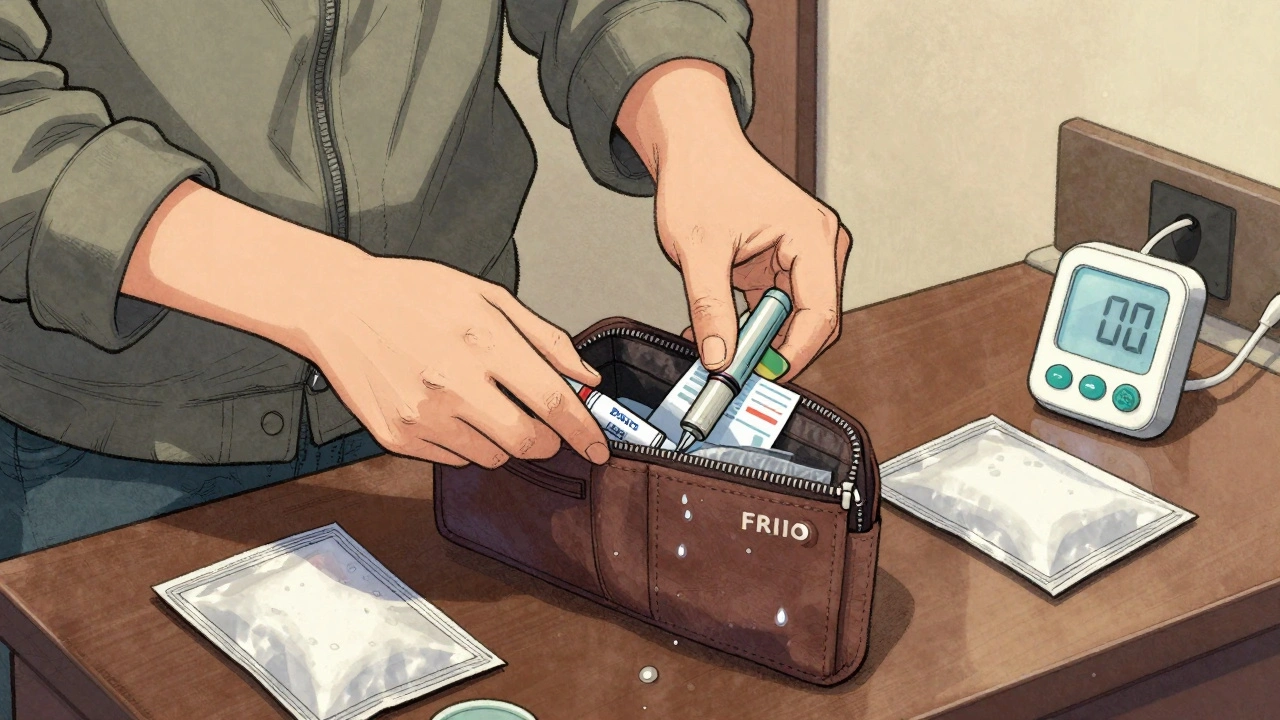
How to Keep Travel Medications Within Shelf Life on Long Trips
Learn how to protect your travel medications from heat, cold, and moisture to keep them effective on long trips. Essential tips for insulin, EpiPens, and other temperature-sensitive drugs.