Latent TB Screening: What You Need to Know Before It Becomes Active
When you hear latent TB, a silent, non-contagious form of tuberculosis infection where the bacteria are alive but inactive. Also known as latent tuberculosis infection, it doesn’t make you sick—but it can wake up later and turn into full-blown disease. That’s why latent TB screening, a simple test to find people carrying the bacteria before symptoms appear matters. It’s not about being sick now. It’s about stopping sickness before it starts.
Most people with latent TB don’t know they have it. The bacteria hide in the lungs, kept in check by the immune system. But if your immunity drops—because of diabetes, cancer treatment, HIV, or even just aging—the bacteria can wake up. That’s when you start coughing, losing weight, and spreading it to others. That’s why TB test, the standard tool used to detect latent infection through skin or blood methods is a quiet lifesaver. The two main tests are the tuberculin skin test (TST) and the interferon-gamma release assay (IGRA). Both are cheap, quick, and accurate. One involves a tiny prick on your arm; the other is just a blood draw. Neither tells you if you’ve had TB before—it only tells you if the bacteria are still in your body.
Who should get screened? People who came from countries where TB is common. Healthcare workers. People living in group settings like shelters or prisons. Anyone on immunosuppressants. And if you’ve been around someone with active TB, you’re at the top of the list. Screening isn’t for everyone—but for those at risk, skipping it is like ignoring a ticking clock.
What happens if the test is positive? Nothing scary. You won’t be isolated. You won’t be quarantined. You’ll just get a short course of antibiotics—usually isoniazid or rifampin—to kill the hidden bacteria. This cuts your risk of developing active TB by up to 90%. It’s simple. It’s safe. And it stops the chain before it starts.
You won’t find stories here about dramatic TB outbreaks or hospital emergencies. What you’ll find are real, practical guides on how screening works, what the tests really mean, how to prepare for them, and what to do if your result comes back positive. These posts cover everything from how to interpret test results to managing side effects of treatment, how to talk to your doctor about risk, and why some people need repeat testing. This isn’t theory. It’s what actually happens in clinics, pharmacies, and homes when someone gets screened—and what comes next.
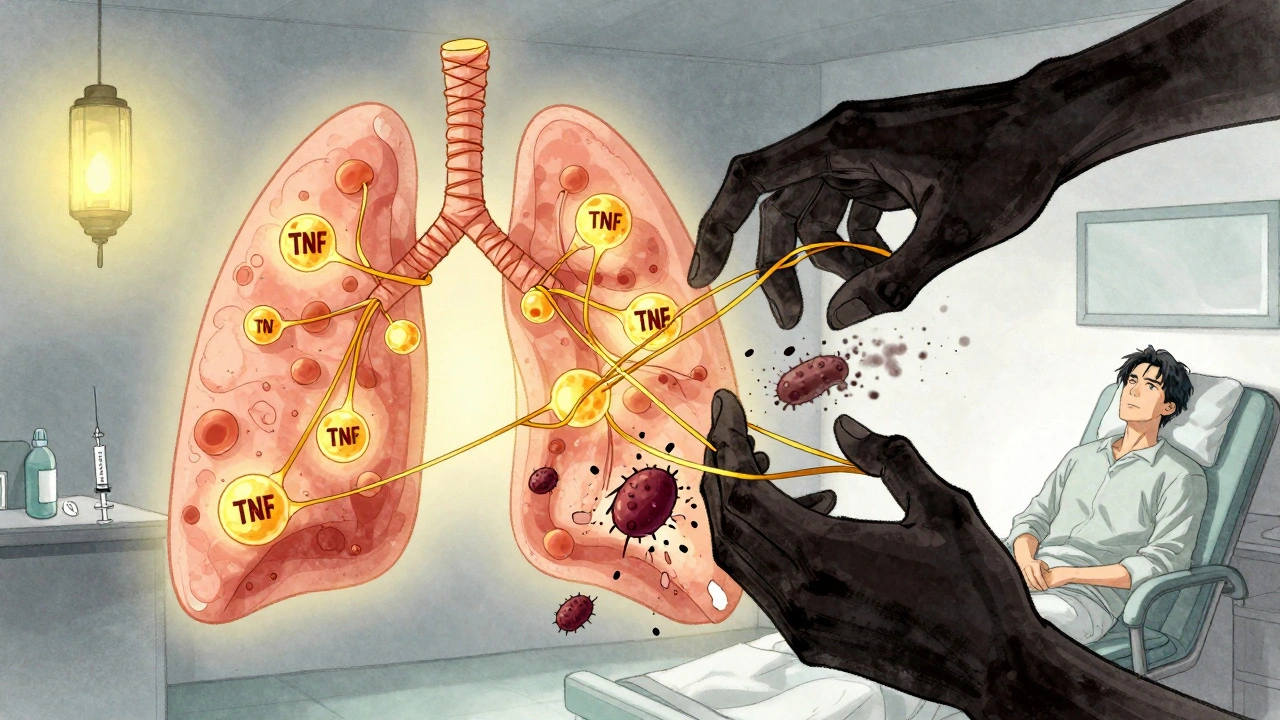
TNF Inhibitors and TB Reactivation: Screening and Monitoring Guidelines
TNF inhibitors effectively treat autoimmune diseases but carry a risk of reactivating latent tuberculosis. Screening with TST or IGRA, treating latent TB before starting therapy, and ongoing symptom monitoring are essential to prevent life-threatening complications.