LEP patients: Breaking down barriers to proper medication care
When someone is a LEP patient, a person with limited English proficiency who struggles to understand medical instructions due to language barriers. Also known as non-English-speaking patients, it often means they can’t read prescription labels, ask questions during appointments, or recognize warning signs from their meds. This isn’t just about translation—it’s about safety. A 2023 study in the Journal of General Internal Medicine found LEP patients are 35% more likely to have a medication error than English-speaking patients, simply because they didn’t fully understand what they were told.
These patients don’t just need translators—they need cultural competency, the ability of healthcare providers to understand and respect a patient’s cultural background, beliefs, and communication style. For example, some cultures see taking multiple pills as a sign of weakness. Others avoid certain drugs because of religious beliefs. If a provider doesn’t ask, they won’t know. And if they don’t know, they can’t adjust care. That’s why simple phrases like "Can you show me how you take this?" matter more than any printed handout.
Then there’s medication access, the ability to get the right drugs at the right time without financial or logistical barriers. Many LEP patients work multiple jobs, lack reliable transportation, or can’t afford co-pays—even when they understand what they need. A patient who can’t read the label on their insulin might skip doses because they’re scared of making a mistake. Another might not refill their blood pressure med because they think the pharmacy gave them the wrong pill. These aren’t compliance issues—they’re system failures.
And it’s not just about language. It’s about trust. Many LEP patients come from countries where doctors don’t explain things, or where pharmacies sell meds without prescriptions. They don’t know they have the right to ask for help. They don’t know they can request a bilingual pharmacist or ask for a video interpreter. They stay quiet. And that silence costs lives.
What you’ll find in the posts below isn’t theory. It’s real-world advice that matters to people who are trying to stay healthy while fighting against a system that wasn’t built for them. You’ll see how to spot when someone’s struggling to understand their meds, how to use free tools to bridge language gaps, and what to do when a patient says "yes" but clearly doesn’t mean it. You’ll learn how to protect someone from dangerous drug interactions, how to help them save money without risking safety, and why a simple checklist can be the difference between hospitalization and home.
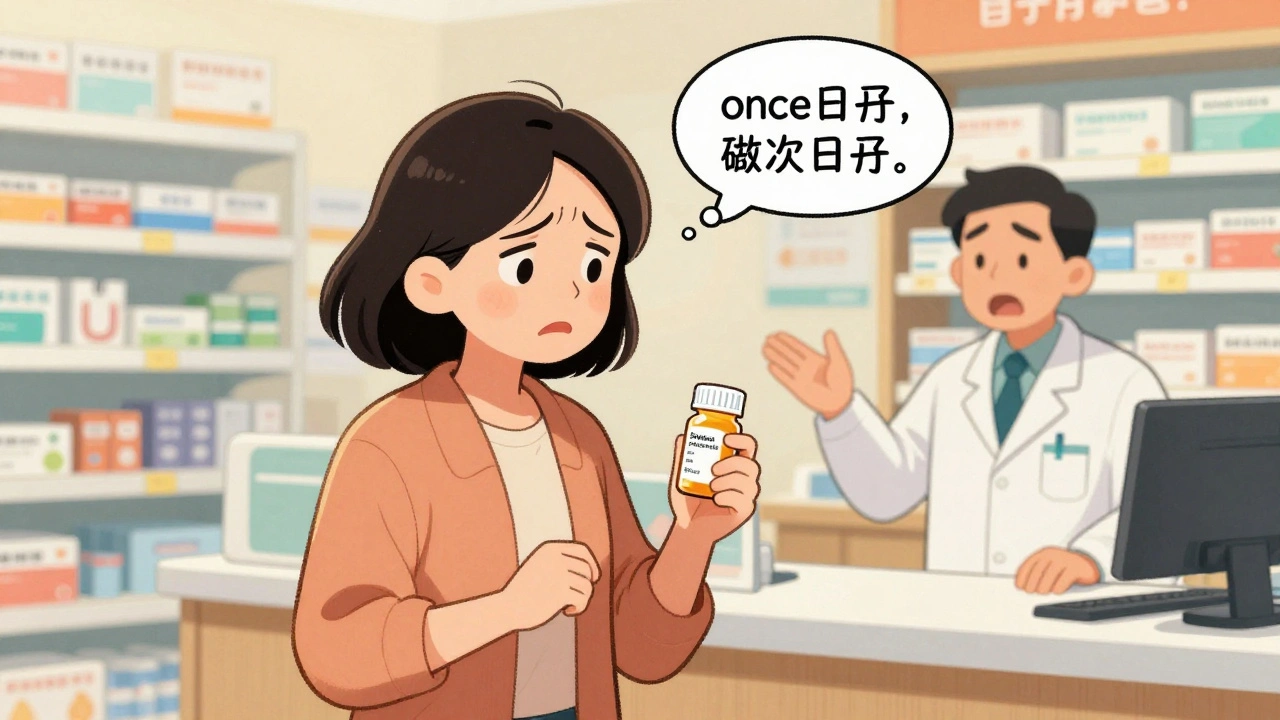
Language Barriers and Medication Safety: How to Get Help
Language barriers in healthcare lead to dangerous medication errors. Learn how professional interpreters, translated instructions, and direct observation can prevent harm-and what patients and providers can do to ensure safety.