Low T3 Syndrome: What It Is, Why It Matters, and How It Connects to Thyroid Health
When your body isn’t making enough low T3 syndrome, a condition where the active thyroid hormone T3 drops while TSH and T4 stay normal. Also known as euthyroid sick syndrome, it often shows up when you’re sick, stressed, or recovering from injury—not because your thyroid is broken, but because your body is conserving energy. This isn’t hypothyroidism. Your thyroid gland might be working fine, but your cells aren’t getting the T3 they need. That’s why standard thyroid tests can look normal while you still feel tired, cold, or mentally foggy.
What drives low T3 syndrome? It’s often a response to chronic illness, conditions like heart failure, kidney disease, or severe infections that trigger metabolic changes. Reverse T3, an inactive form of thyroid hormone that blocks T3 from working rises at the same time, acting like a brake on metabolism. This isn’t a mistake—it’s an evolutionary survival move. Your body shuts down non-essential functions to focus on healing. But if this state drags on, it can leave you stuck in fatigue mode.
Doctors often miss this because labs show normal TSH and T4. But if you’ve been told your thyroid is fine and you still can’t shake exhaustion, low T3 syndrome might be the hidden piece. It’s common in people with long-term stress, dieting, or after major surgery. It’s also linked to depression, poor sleep, and muscle weakness—symptoms that don’t always get tied back to thyroid metabolism. Unlike Hashimoto’s, you won’t find thyroid antibodies here. The problem isn’t autoimmunity—it’s adaptation gone too long.
What you’ll find in the posts below isn’t a one-size-fits-all fix. There’s no magic pill to raise T3 fast. But you’ll see real-world insights on how medications like antidepressants, steroids, and even beta-blockers can affect thyroid conversion. You’ll learn how liver and kidney health play a role in hormone processing, and why some people feel worse on thyroid meds that don’t address the root issue. These aren’t theoretical debates—they’re stories from patients and clinicians who’ve seen this play out in real time. If you’ve been told your thyroid is normal but you still don’t feel right, this collection gives you the context to ask better questions.
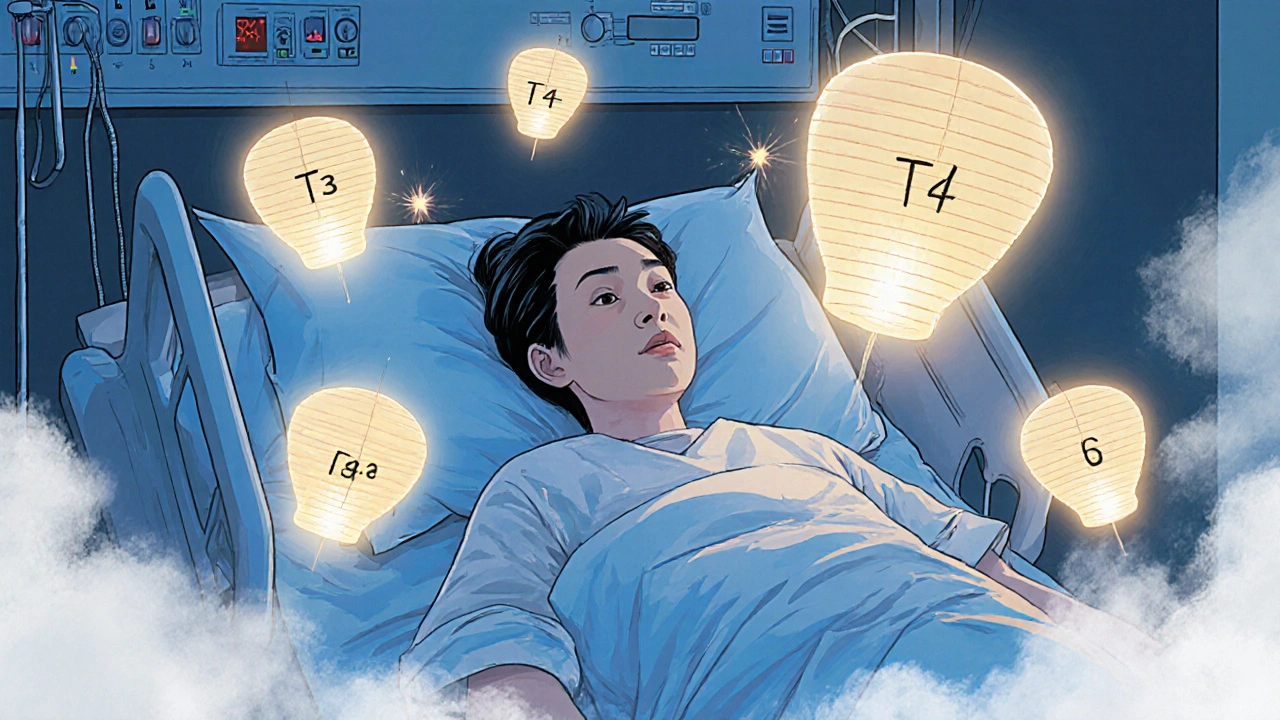
Sick Euthyroid Syndrome: How Illness Skews Thyroid Test Results
Sick euthyroid syndrome causes abnormal thyroid blood tests during serious illness-but the thyroid itself is healthy. Learn why low T3 and T4 aren't signs of hypothyroidism and why treatment can do more harm than good.