Medication Shelf Life: How Long Your Pills Really Last and What Happens When They Expire
When you see an expiration date, the date a manufacturer guarantees a drug will remain fully potent and safe under proper storage on your pill bottle, it’s not just a suggestion—it’s a science-backed limit. That date isn’t about the pill turning poisonous overnight, but about how long the active ingredients stay strong enough to work as intended. Most medications are tested for stability under controlled conditions, and manufacturers set expiration dates based on real data, not guesswork. Even if your medicine looks fine—no discoloration, no weird smell—it might be losing strength over time. This is especially true for liquids, creams, and insulin, which break down faster than solid tablets.
How you store your meds matters just as much as the date on the label. storage conditions, how temperature, humidity, and light affect drug integrity can shorten shelf life dramatically. Keeping antibiotics in a hot bathroom or insulin in direct sunlight can make them useless long before the printed date. The FDA says most pills stored in a cool, dry place like a bedroom drawer will stay effective for years past their expiration—sometimes even a decade. But that doesn’t mean you should take them. The real risk isn’t always toxicity; it’s reduced effectiveness. A weakened antibiotic might not kill all the bacteria, leading to resistant infections. A weak heart pill might not control your blood pressure, putting you at risk for stroke or heart attack.
drug stability, how well a medication maintains its chemical structure over time varies by type. Solid tablets and capsules tend to hold up better than liquids or suspensions. Eye drops, once opened, usually expire after 28 days—even if the bottle says 2 years. Nitroglycerin tablets lose potency fast if not kept in their original glass bottle. Even common painkillers like ibuprofen or acetaminophen can degrade, especially in humid climates. The expired drugs, medications past their labeled expiration date that may no longer be fully effective you find in your medicine cabinet might still be safe, but they’re not guaranteed to work. And when your health depends on it, you can’t afford to guess.
Some exceptions exist. The U.S. military tested stockpiled drugs and found many were still effective decades after expiration. But that’s under lab-grade storage—something you don’t have at home. If you’re on a chronic medication and your prescription runs out, don’t stretch it. Talk to your pharmacist. They can tell you if your specific drug is known to degrade quickly or if it’s generally stable. For life-saving drugs like epinephrine or insulin, never use an expired dose. For a cold pill or allergy med, it’s less risky—but still not worth the gamble. Your body doesn’t respond to weak meds the same way it does to full-strength ones. And when you’re sick, you need the real thing.
What you’ll find below are real, practical guides on how to check if your meds are still good, how to store them right, what happens when they go bad, and which ones you should never risk using. From antibiotics to heart pills to over-the-counter pain relievers, these articles give you the facts—not myths—so you can make smart, safe choices with every pill you take.
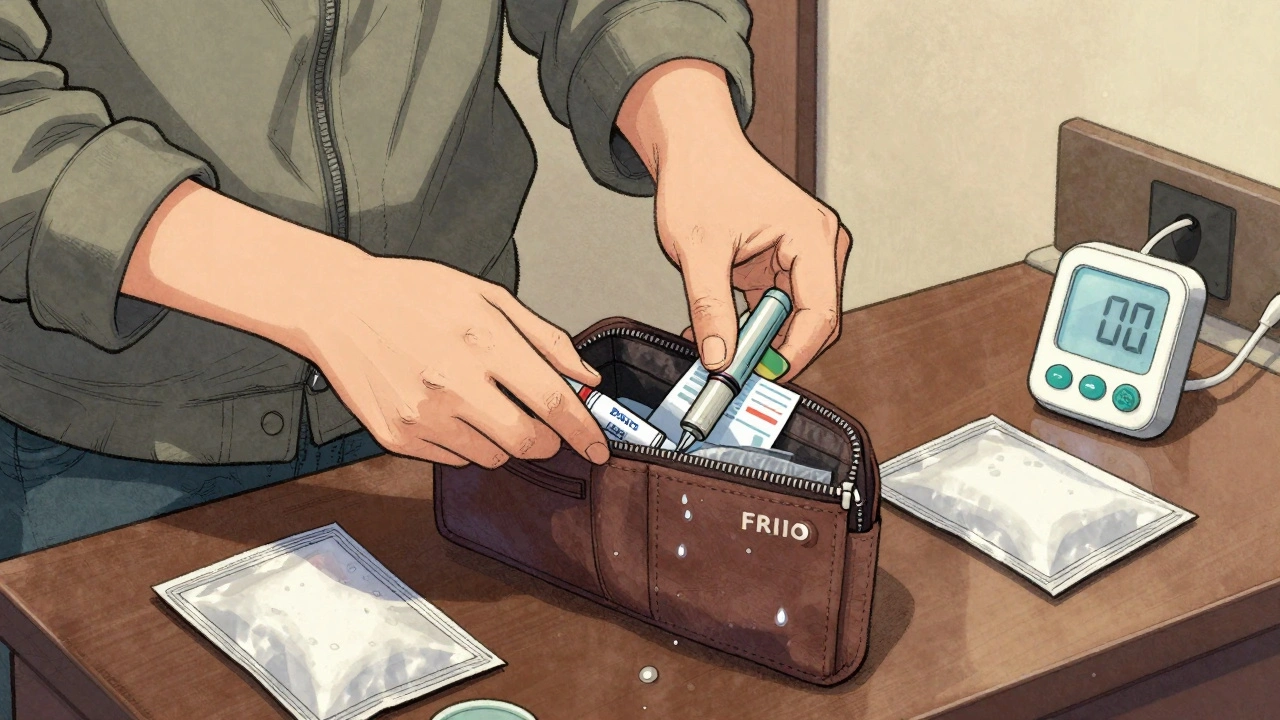
How to Keep Travel Medications Within Shelf Life on Long Trips
Learn how to protect your travel medications from heat, cold, and moisture to keep them effective on long trips. Essential tips for insulin, EpiPens, and other temperature-sensitive drugs.