NTIS: Understanding Drug Safety, Brain Effects, and Medication Risks
When we talk about NTIS, a term often used in pharmacology to describe the interaction between drugs and nervous system function. It’s not a drug itself, but a lens—helping us see how medications influence brain chemistry, nerve signaling, and long-term health outcomes. This includes everything from the quiet changes in brainwave patterns caused by nootropics like piracetam to the dangerous drop in cognitive function from long-term anticholinergic drugs like Benadryl. NTIS isn’t just theory—it’s what happens when you take a pill and your body responds in ways you don’t always notice until it’s too late.
One major thread running through the posts here is drug safety, how medications behave in the body over time and what hidden dangers they might carry. Some side effects are predictable—like drowsiness from antihistamines or dry mouth from antidepressants. These are Type A reactions, common and often manageable. But then there are Type B reactions: rare, unpredictable, and sometimes deadly. Think of the deadly mix of opioids and benzodiazepines that shuts down breathing, or how MAOIs can trigger a hypertensive crisis if you eat aged cheese. These aren’t accidents—they’re gaps in awareness.
Another key area under NTIS is how drugs alter brain function. brainwave patterns, the electrical rhythms that control focus, memory, and sleep. Piracetam doesn’t just make you feel sharper—it changes your EEG, boosting alpha and gamma coherence. That’s measurable. Same with antidepressants: some make you insomnia, others help you sleep. It’s not random. It’s neuropharmacology in action. And when you add in conditions like kidney or liver disease, the whole equation shifts. A drug that’s safe for most becomes dangerous when your body can’t clear it. That’s why Apixaban often beats warfarin in these cases—it’s simpler, more predictable.
NTIS also ties into how we use meds in daily life. Pharmacy delivery isn’t just convenient—it’s a tool to reduce errors and improve adherence. Generic drugs aren’t just cheaper—they’re the reason millions stick to their treatment plans for high blood pressure, depression, or cholesterol. And when you’re dealing with cold-induced hives or sun-related eye redness, it’s not just about symptoms—it’s about understanding triggers tied to your body’s response system.
What you’ll find here isn’t guesswork. It’s real data from clinical studies, patient experiences, and doctor practices. You’ll learn which antihistamines to avoid after 50, why certain chemo drugs are swapped out based on toxicity, and how to tell if your sleep trouble comes from your antidepressant or something else. There’s no fluff. Just clear, direct info on what works, what doesn’t, and why.
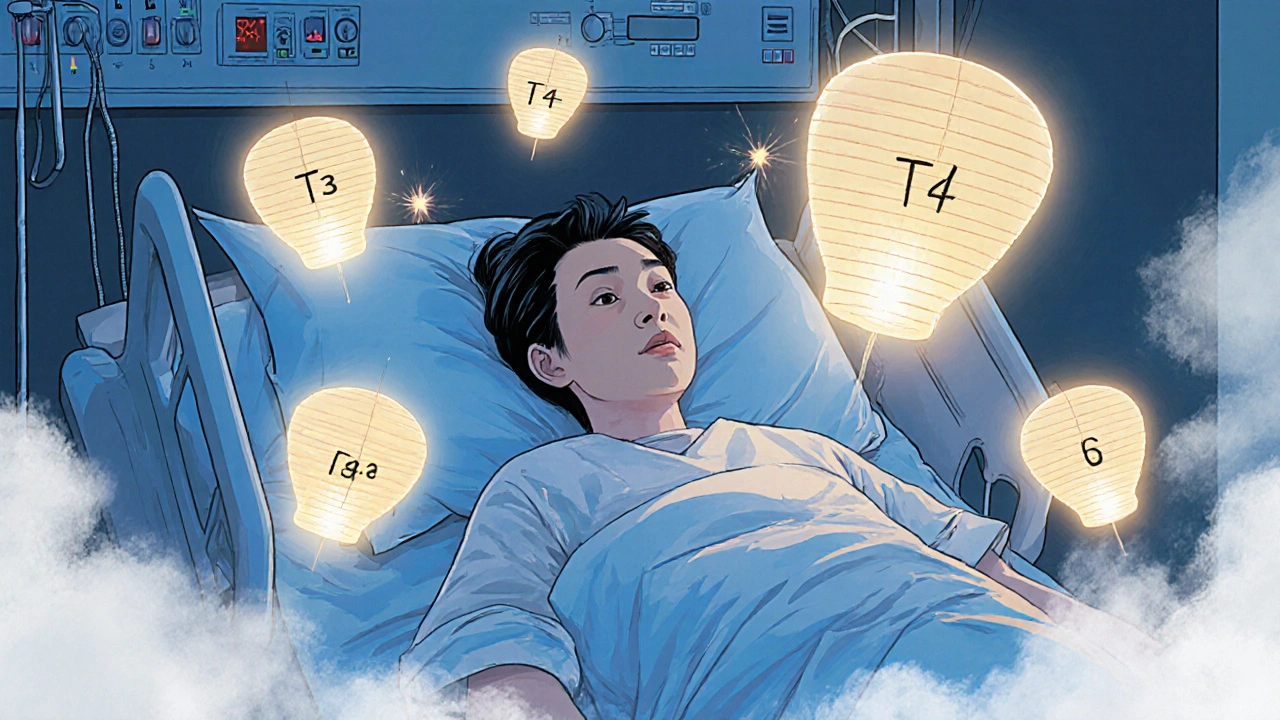
Sick Euthyroid Syndrome: How Illness Skews Thyroid Test Results
Sick euthyroid syndrome causes abnormal thyroid blood tests during serious illness-but the thyroid itself is healthy. Learn why low T3 and T4 aren't signs of hypothyroidism and why treatment can do more harm than good.