How to Prevent Foot Ulcers: Practical Steps for Diabetics and At-Risk Adults
When you have diabetes, a chronic condition that affects how your body manages blood sugar, even a small cut on your foot can turn into a serious problem. That’s because high blood sugar damages nerves and reduces blood flow—making it harder to feel injury and slower to heal. This is how foot ulcers, open sores on the feet that don’t heal easily form. They’re not just painful—they can lead to infection, hospitalization, or even amputation if ignored. But the good news? Most foot ulcers are preventable with consistent, simple care.
One of the biggest risks is peripheral neuropathy, nerve damage that causes numbness in the feet. If you can’t feel heat, pressure, or a pebble in your shoe, you won’t know you’re hurting yourself. That’s why daily foot checks are non-negotiable. Look for redness, swelling, cracks, or any change in skin color. Wash your feet every day with warm (not hot) water, dry them thoroughly—especially between the toes—and use moisturizer to prevent dry, cracked skin. Never go barefoot, even indoors. Wear shoes that fit well and don’t rub. If you have trouble trimming your nails or seeing your feet, ask a professional for help. Your podiatrist isn’t just for when things go wrong—they’re part of your prevention team.
It’s not just about your feet—it’s about your whole body. Controlling your blood sugar is the foundation. No magic pill, no miracle cream, just steady numbers. Check your levels as your doctor recommends. Stay active. Walking improves circulation and helps manage glucose. Quit smoking. Smoking tightens blood vessels and makes healing even harder. And don’t wait for pain. If your foot feels cold, looks blue, or you notice a sore that won’t heal after a few days, see someone immediately. The earlier you catch it, the easier it is to fix.
The posts below give you real, practical advice from people who’ve been there—how to choose the right shoes, what to do if you develop a blister, how to spot early signs of infection, and how to talk to your doctor about foot care without feeling dismissed. These aren’t theoretical tips. They’re the steps that keep people walking—without pain, without hospital visits, without losing a foot.
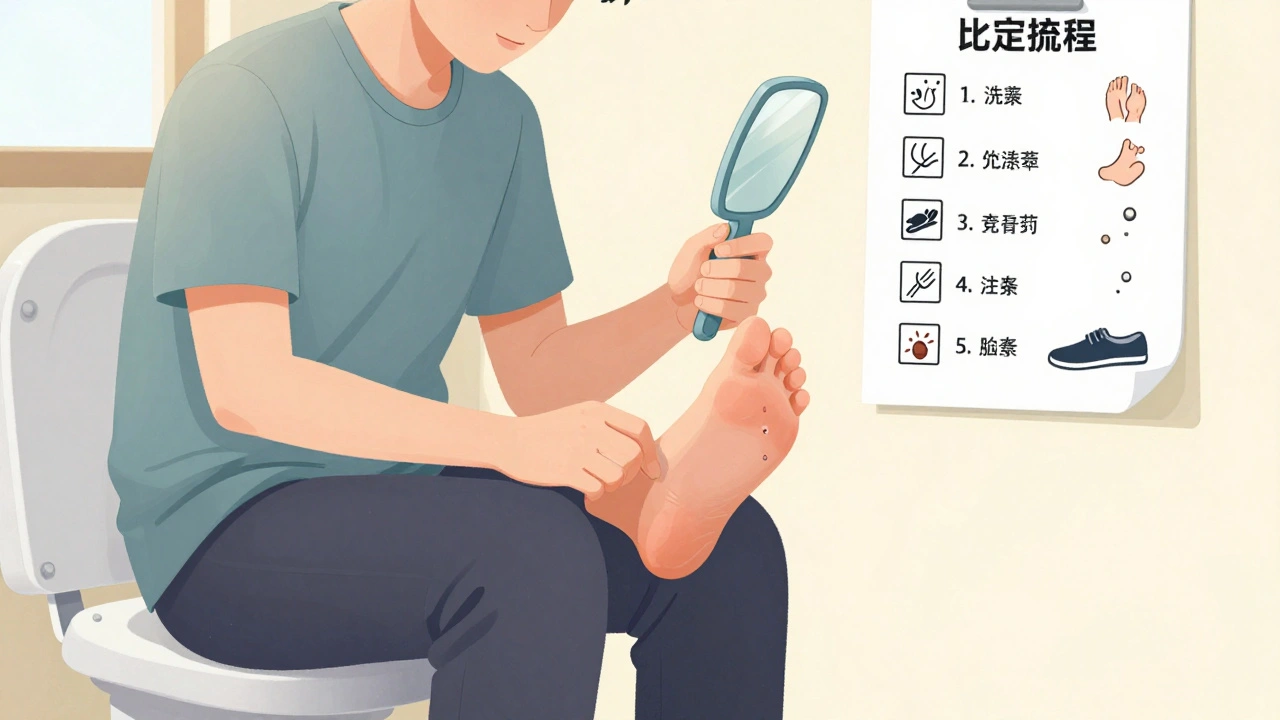
Diabetes Foot Care: Ulcer Prevention and Daily Inspection Checklist
Learn how to prevent diabetic foot ulcers with a proven daily inspection checklist. Understand risk levels, proper foot care, footwear rules, and when to seek help to avoid amputation.