Sick Euthyroid Syndrome: What It Is and How It Affects Thyroid Tests
When you're seriously ill, your body doesn't always behave the way it should—and that includes your thyroid. Sick euthyroid syndrome, a temporary change in thyroid hormone levels caused by severe illness, not by a problem with the thyroid gland itself. Also known as non-thyroidal illness syndrome, it tricks blood tests into showing low T3, high reverse T3, and sometimes low T4—like your thyroid is failing, when it's actually just reacting to stress. This isn't hypothyroidism. It's your body slowing down metabolism to conserve energy during infection, trauma, surgery, or chronic disease. If you're recovering from pneumonia, battling cancer, or healing after a heart attack, your thyroid numbers might look broken—but they're not.
This condition shows up often in people with serious health issues. It’s common in ICU patients, those with advanced kidney or liver disease, and even in people with severe depression or malnutrition. The hormone changes aren't random—they follow a pattern. T3 drops first because the body stops converting T4 to active T3. Reverse T3, the inactive form, builds up. TSH often stays normal or dips slightly, which is why doctors can’t rely on TSH alone to diagnose thyroid problems in sick patients. Thyroid hormone levels, the measurable values of T3, T4, and TSH in the blood become unreliable markers during illness. That’s why treating sick euthyroid syndrome with thyroid pills doesn’t help—and can even hurt. You’re not missing thyroid hormone; your body is just pausing its use of it.
What makes this confusing is that it looks exactly like hypothyroidism on paper. But if you give someone with sick euthyroid syndrome levothyroxine, their symptoms won’t improve. In fact, they might get worse. The real fix isn’t more hormones—it’s treating the underlying illness. Once the infection clears, the cancer goes into remission, or the body heals from surgery, the thyroid numbers bounce back on their own. That’s why doctors avoid jumping to thyroid treatment unless the patient is stable and the abnormal labs persist after recovery.
There’s no test that says "this is sick euthyroid syndrome"—just a pattern of results, combined with clinical context. If you’ve had recent surgery, are in the hospital with pneumonia, or are fighting a chronic condition, and your thyroid tests look off, your doctor should ask: "What’s the bigger picture?" Not every low T3 means your thyroid is broken. Sometimes, it just means your body is trying to survive.
Below, you’ll find real-world guides that explain how this condition shows up in bloodwork, how it’s confused with true thyroid disease, and what treatments actually work—or don’t—when your body is under stress. You’ll see how it connects to medications, chronic illness, and even how some drugs can make the pattern worse. This isn’t theory. It’s what happens in clinics, ERs, and hospitals every day.
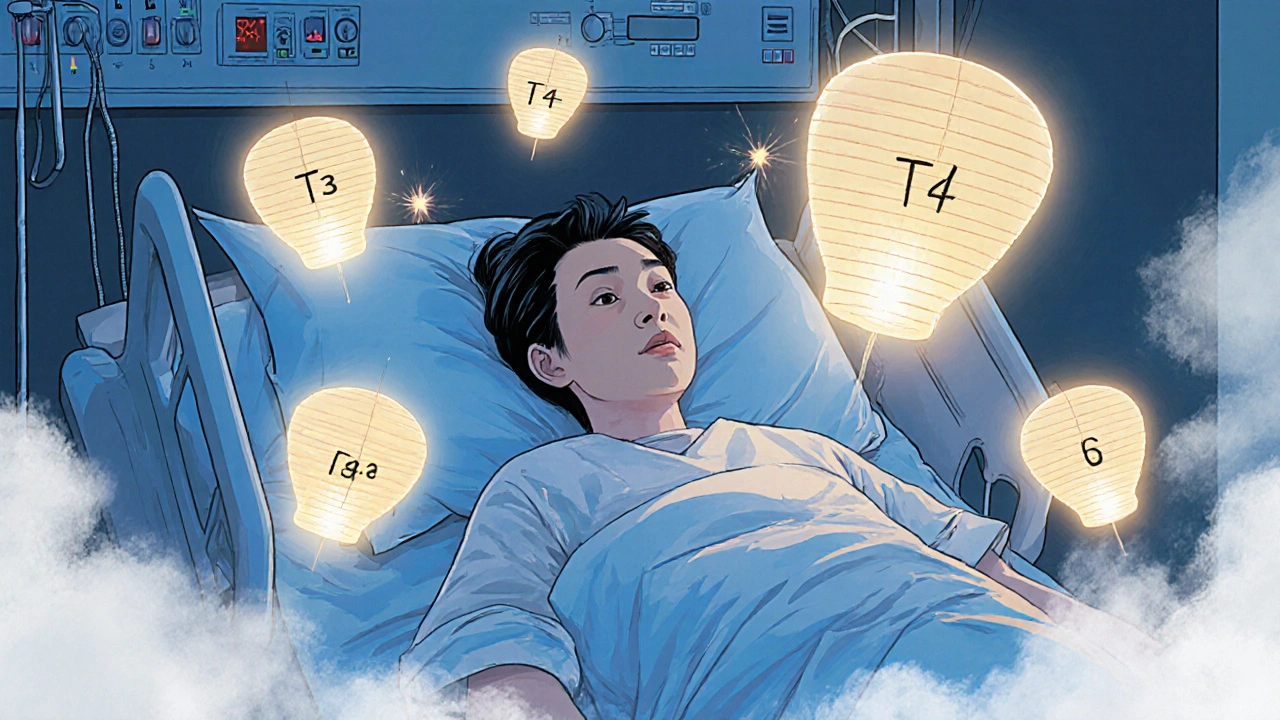
Sick Euthyroid Syndrome: How Illness Skews Thyroid Test Results
Sick euthyroid syndrome causes abnormal thyroid blood tests during serious illness-but the thyroid itself is healthy. Learn why low T3 and T4 aren't signs of hypothyroidism and why treatment can do more harm than good.