Teleophthalmology: Remote Eye Care and How It’s Changing Diabetes and Retina Monitoring
When you think of an eye exam, you probably picture sitting in a dark room, staring at letters on a chart while a doctor flips lenses. But teleophthalmology, a method of delivering eye care remotely using digital imaging and secure communication tools. Also known as remote ophthalmology, it’s now helping millions get timely screenings—especially for conditions like diabetic retinopathy—without driving to a clinic. This isn’t science fiction. It’s happening right now in rural towns, nursing homes, and even at your primary care doctor’s office.
Teleophthalmology relies on two key tools: retinal imaging, high-resolution photos of the back of the eye taken with specialized cameras, and diabetic retinopathy, a leading cause of blindness in adults with diabetes, detectable through early changes in blood vessels. A nurse or technician takes the images in a local clinic, then sends them to an ophthalmologist hundreds of miles away. The specialist reviews them within hours—not days or weeks—and flags any signs of damage. This cuts down delays that often lead to permanent vision loss. It’s especially vital for people with diabetes, who need yearly screenings but often miss them due to cost, transportation, or busy schedules.
It’s not just for diabetes. Teleophthalmology is also used for glaucoma monitoring, age-related macular degeneration checks, and even pediatric eye screenings in underserved areas. The technology doesn’t replace doctors—it gives them more eyes on more patients, faster. And because the images are stored digitally, trends over time are easier to track. You don’t need a fancy hospital. A basic camera, a tablet, and a secure connection are enough.
What you’ll find in the posts below are real-world examples of how this system works in practice. From daily foot checks for diabetics to managing steroid-induced blood sugar spikes, these articles show how small, consistent actions—like catching eye damage early—prevent big problems later. You’ll also see how medication safety, patient education, and access to care all tie into the bigger picture of keeping vision intact. This isn’t just about technology. It’s about making sure the right care reaches the right person, at the right time.
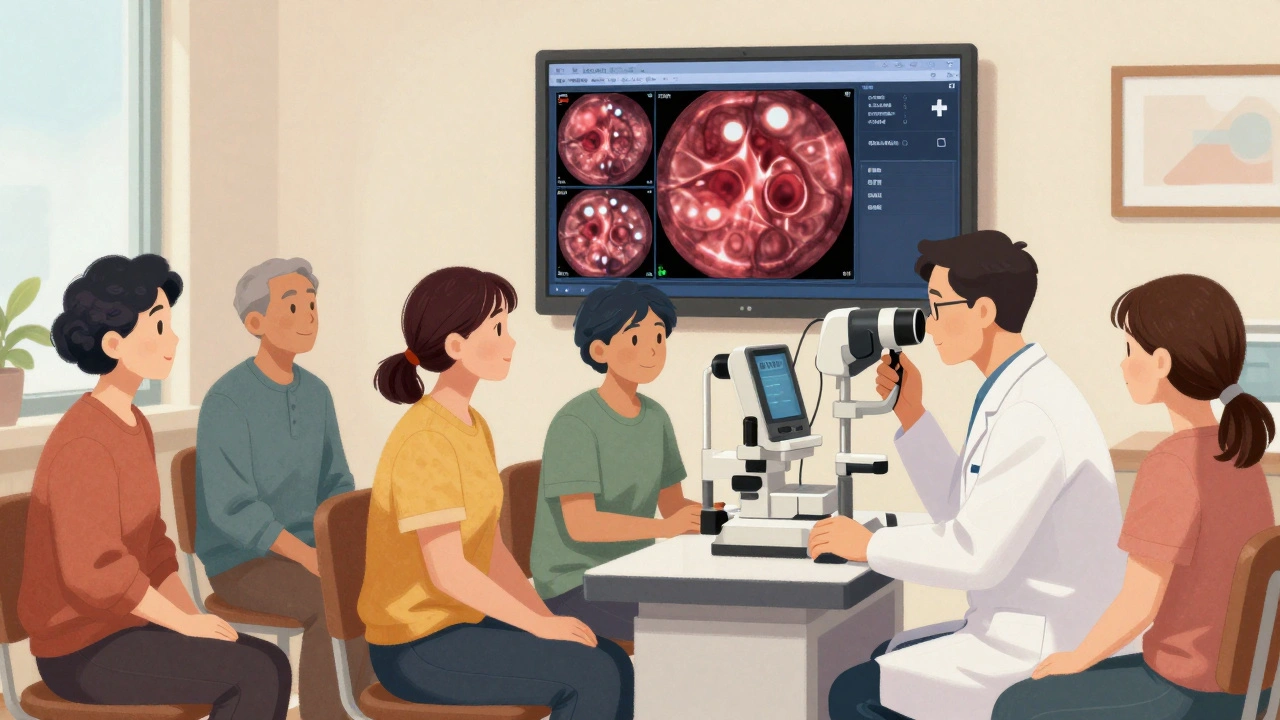
Diabetic Eye Screening: How Often You Need It and How Teleophthalmology Is Changing the Game
Diabetic eye screening saves vision-but most people skip it. Learn how often you need it, how teleophthalmology is making it easier, and why AI is changing the game for diabetes-related eye disease.