Thyroid Function in Illness: How Sickness Changes Your Thyroid and What It Means for You
When you're sick, your body doesn't just fight infection—it rewires its hormones. One of the most overlooked changes happens in the thyroid function in illness, the way your thyroid hormone levels shift during acute or chronic disease, often without actual thyroid damage. Also known as non-thyroidal illness syndrome, this isn't a disease of the thyroid itself, but a survival response your body makes when it's under stress. Your thyroid keeps working, but your brain tells it to slow down hormone production. Levels of T3, the active thyroid hormone, drop. T4 might stay normal or dip. TSH—the hormone that usually signals the thyroid—often looks normal, even when your body is clearly in crisis. This pattern fools doctors into thinking you have hypothyroidism when you don't. And giving you thyroid pills? It won't help. It might even hurt.
This isn't just about being run down after the flu. It happens in heart failure, sepsis, cancer, liver disease, and even prolonged fasting. The body lowers metabolism to save energy. That’s why patients in the ICU often have weird thyroid blood tests. It’s not a lab error. It’s biology. The non-thyroidal illness syndrome, a reversible hormonal adaptation during systemic illness. Also known as sick euthyroid syndrome, it’s a sign your body is prioritizing survival over energy use. You don’t need treatment unless the underlying illness is resolved and thyroid levels still don’t bounce back—which is rare. Most people panic when their T3 is low. But if you’re recovering from pneumonia or surgery, that low T3 is your body doing its job.
What about thyroid testing? Don’t trust a single TSH or free T4 if you’re actively sick. The numbers lie. Doctors who don’t know this might misdiagnose you with hypothyroidism and start you on levothyroxine for no reason. That’s why labs from hospital stays or ER visits need context. If you’re fighting an infection, have advanced diabetes, or just had major surgery, your thyroid results are likely part of a bigger story. The real test isn’t the blood draw—it’s how you feel after you recover. If your energy, weight, and mood return to normal, your thyroid was never broken.
And here’s the thing: this pattern shows up in chronic illness too. People with rheumatoid arthritis, kidney disease, or even long-term depression often have abnormal thyroid tests without thyroid disease. The body isn’t broken. It’s adapting. Treating the thyroid in these cases doesn’t fix fatigue or brain fog. Fixing the root illness does.
So if you’ve had thyroid blood work done while sick and were told you need medication, ask: "Was I actively ill when this was drawn?" If yes, wait until you’re well. Retest. Most of the time, everything returns to normal on its own. Your thyroid isn’t failing. Your body is just being smart.
In the posts below, you’ll find real-world examples of how illness changes thyroid hormone patterns, why some meds mess with your results, how to interpret labs correctly, and when to trust—or ignore—your thyroid numbers. These aren’t theory pieces. They’re based on clinical data, patient experiences, and what doctors actually do when the numbers don’t make sense.
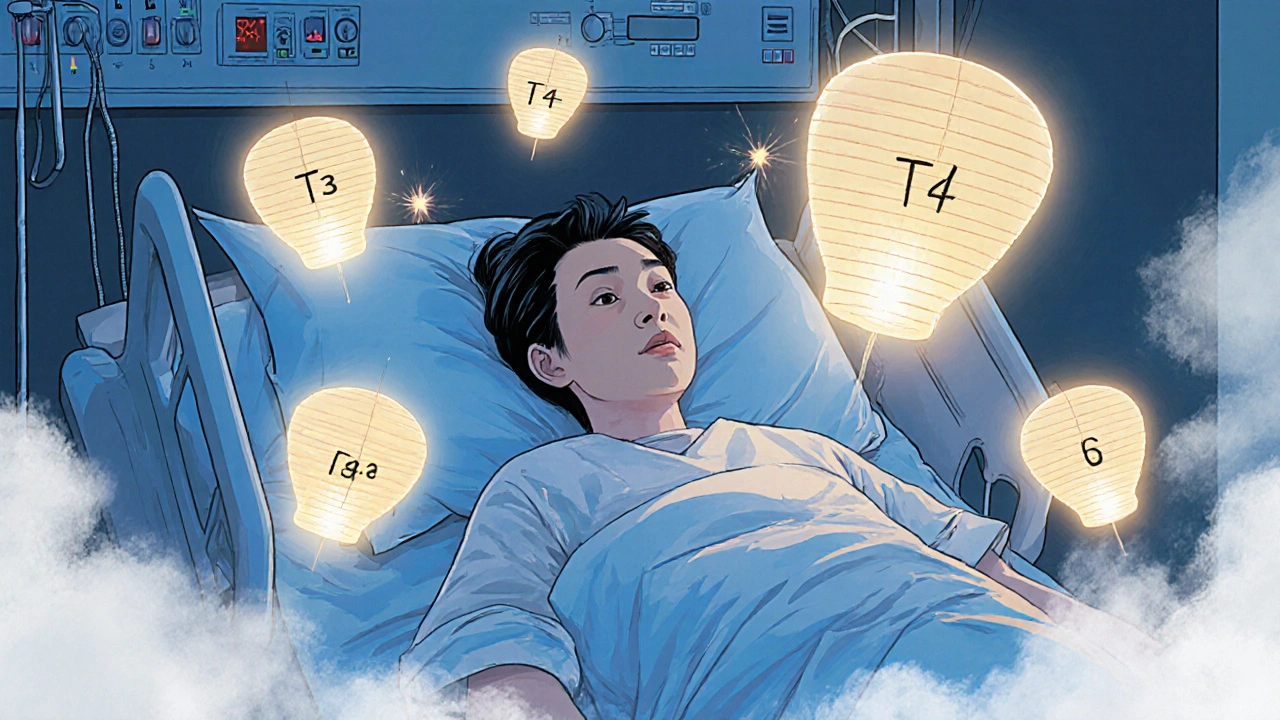
Sick Euthyroid Syndrome: How Illness Skews Thyroid Test Results
Sick euthyroid syndrome causes abnormal thyroid blood tests during serious illness-but the thyroid itself is healthy. Learn why low T3 and T4 aren't signs of hypothyroidism and why treatment can do more harm than good.