Unannounced FDA Inspections: What They Are and Why They Matter
When you take a pill, you assume it’s safe, pure, and made the right way. That’s not luck—it’s because of unannounced FDA inspections, surprise visits by federal inspectors to drug manufacturing sites to check for compliance with safety and quality standards. Also known as surprise inspections, these checks are one of the last lines of defense against contaminated, ineffective, or dangerously made medications. Unlike scheduled audits, which companies can prep for, unannounced inspections catch real-world conditions: dirty equipment, skipped tests, falsified records, or workers cutting corners to meet deadlines.
These inspections aren’t rare—they happen regularly across U.S. and foreign facilities that make drugs sold here. The FDA doesn’t tip off manufacturers because if they did, some would clean up just for the visit and go right back to risky practices. The goal is to see how things actually run day to day. If inspectors find serious violations, they can shut down production, block imports, or force recalls. In 2022, over 1,200 unannounced inspections were conducted, and nearly 40% of foreign facilities had at least one major issue. That’s not a small number—it’s a warning.
Behind every drug manufacturing compliance, the system of rules and practices drug makers must follow to ensure their products are safe and consistent is a web of standards: Good Manufacturing Practices (GMP), data integrity rules, and contamination controls. FDA enforcement, the actions the agency takes when companies break the rules, including warning letters, import bans, and criminal charges isn’t just about punishment. It’s about keeping bad drugs off shelves. Think of it like a restaurant health inspection—but instead of finding moldy lettuce, they’re catching a batch of insulin that’s too weak or a painkiller laced with toxic chemicals.
And it’s not just about big pharma. Generic drug makers, contract labs, and even small suppliers of active ingredients are all fair game. One unannounced visit to a tiny lab in India once uncovered a pattern of data manipulation that led to the recall of over 100 million pills in the U.S. That’s the ripple effect. A single inspection can protect millions.
What you won’t see are the inspections that never happen—because a company got its act together after a previous warning. That’s the quiet success. The real win isn’t shutting down a plant. It’s making sure every pill you buy is made right the first time, every time.
Below, you’ll find articles that dig into how drugs are tested, how safety rules are enforced, and what happens when things go wrong. These aren’t just policy pieces—they’re real stories about how oversight keeps you safe, one pill at a time.
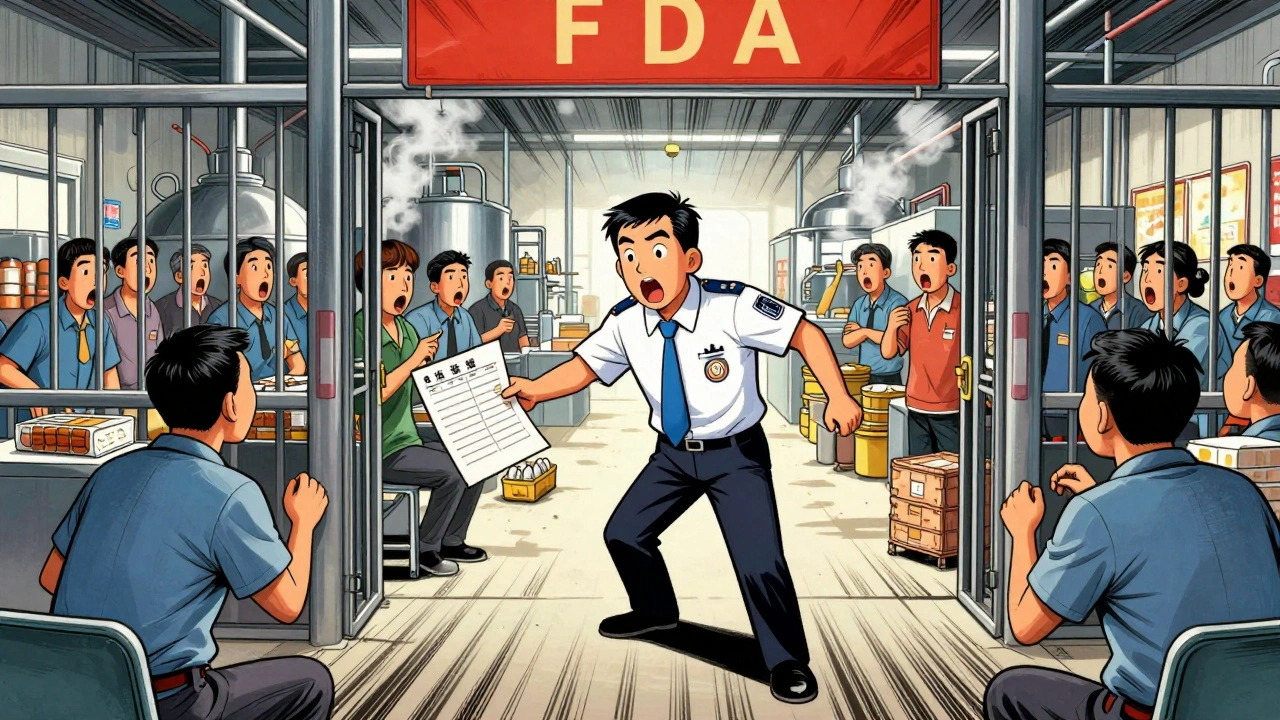
FDA Foreign Facility Inspections: What Overseas Food Plants Must Now Do to Stay Compliant
The FDA now conducts unannounced inspections of overseas food plants to ensure imported products meet U.S. safety standards. Learn what facilities must do to stay compliant and avoid import bans or criminal penalties.