Bioequivalence: What It Means for Generic Drugs and Your Health
When you pick up a generic pill, you want to know it will do the same job as the brand-name version. That’s where bioequivalence, the scientific standard that proves two drug formulations produce the same effect in the body. Also known as therapeutic equivalence, it’s the reason your pharmacist can legally swap your brand-name medication for a cheaper generic without asking your doctor. Without bioequivalence, generics could be weaker, slower to work, or even unsafe—something the FDA doesn’t allow.
Bioequivalence isn’t just a buzzword. It’s tested using real data: how fast the drug enters your bloodstream, how high the levels go, and how long it stays there. These measurements—called AUC and Cmax—are compared between the brand and generic versions. If they’re within 80% to 125% of each other, the drugs are considered bioequivalent. This isn’t guesswork; it’s based on strict clinical studies with healthy volunteers. The FDA Therapeutic Equivalency (TE) codes, a system that classifies which generics can be substituted are built directly on this data. You’ll see TE codes on the FDA’s Orange Book, and they tell pharmacies exactly which substitutions are allowed by law.
But bioequivalence doesn’t mean identical. It means the same outcome. Two pills might have different fillers, coatings, or shapes—but if they deliver the same active ingredient at the same rate and amount, they’re treated as interchangeable. That’s why switching from Lipitor to atorvastatin doesn’t mean your cholesterol control will drop. It’s also why some generics still can’t be swapped: if a drug has a narrow therapeutic index—like warfarin or levothyroxine—small differences in absorption can matter. That’s why those are often flagged with an ‘AB’ code only if proven safe through extra testing.
What you’ll find in this collection are real-world stories and science-backed guides on how bioequivalence affects your daily life. From why your insulin works the same on a generic, to how the FDA checks overseas factories making your pills, to why some pharmacies won’t substitute certain drugs even when they legally can—you’ll see how this technical term connects to your prescriptions, your wallet, and your safety. These aren’t abstract concepts. They’re the rules that keep your medicine working, no matter the price tag.
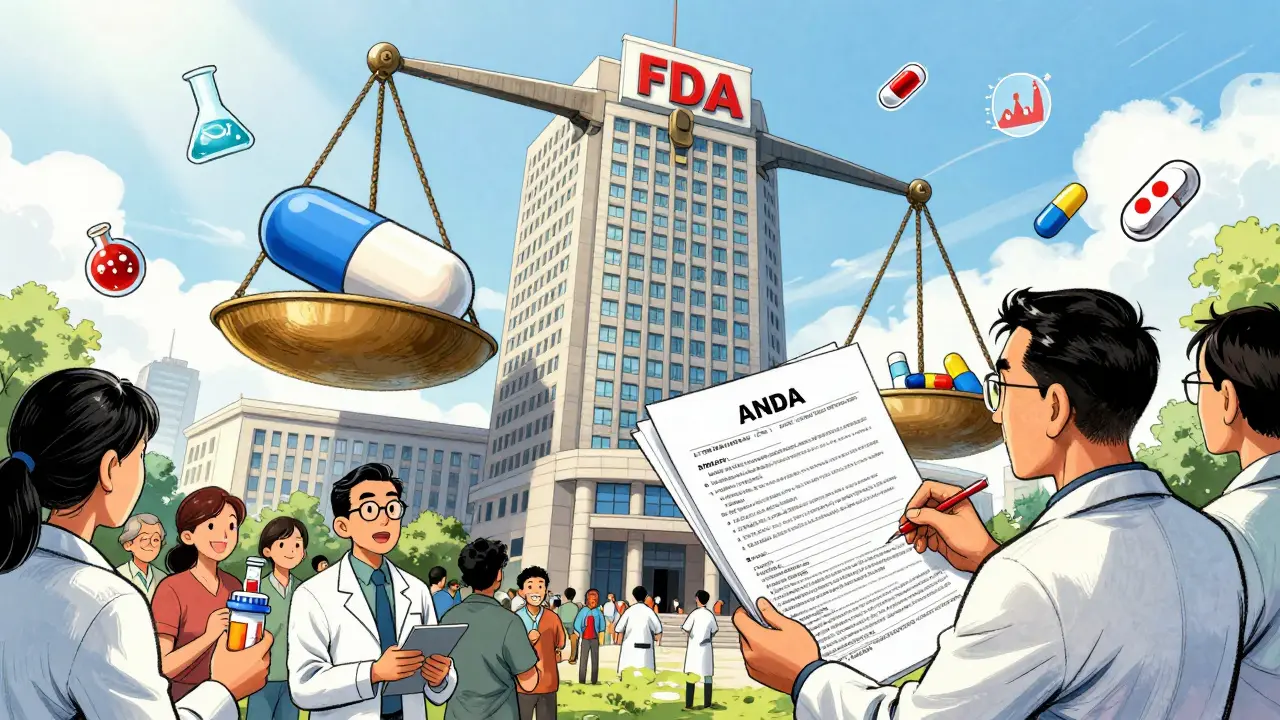
FDA Regulatory Authority: How the Agency Approves Generic Drugs
The FDA approves generic drugs through the ANDA process, ensuring they are bioequivalent to brand-name drugs without repeating clinical trials. This system saves billions annually and makes medications affordable for millions.

Bioequivalence Explained: FDA Requirements to Prove Generic Drug Equivalence
Bioequivalence is how the FDA ensures generic drugs work just like brand-name versions. It's proven through strict pharmacokinetic studies measuring Cmax and AUC, with a 90% confidence interval between 80% and 125%. This science keeps generics safe, effective, and affordable.